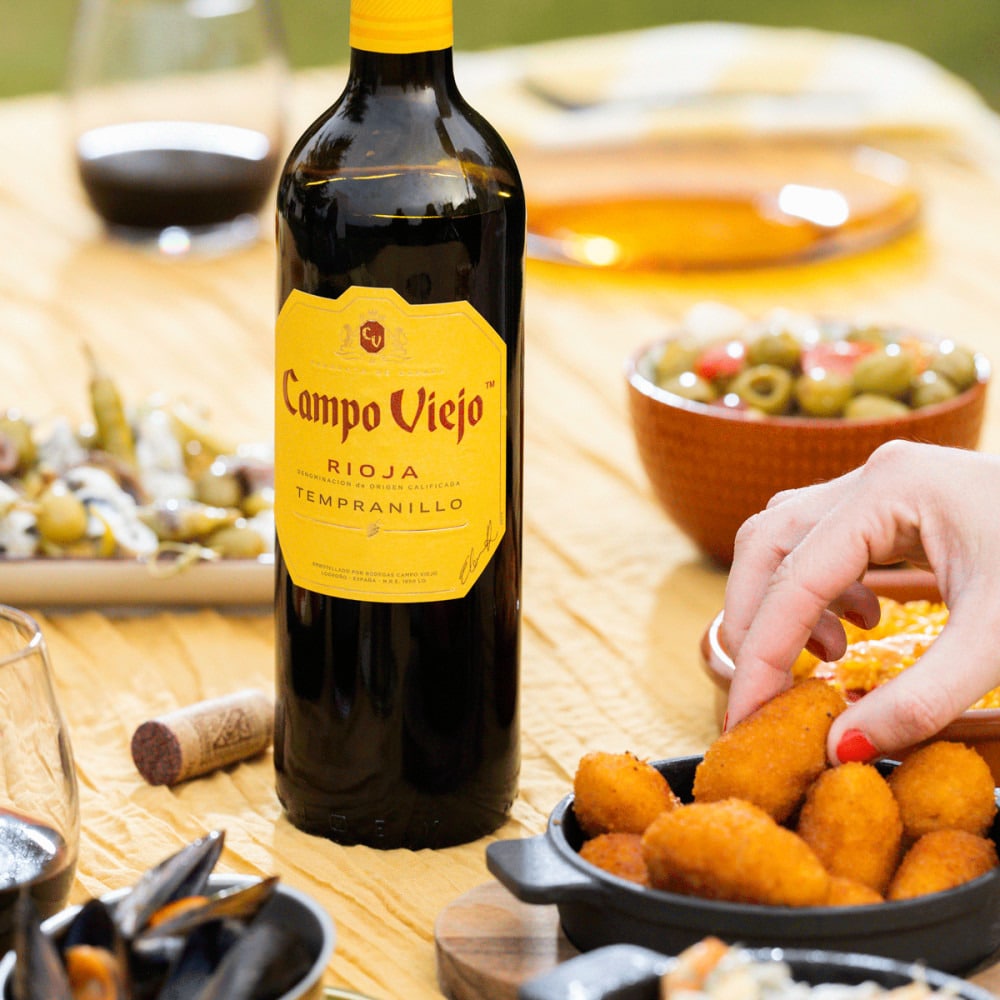
Tempranillo category and producer positioning
The Grocery Store Wine verdict
Campo Viejo
Tempranillo
Campo Viejo is a low-cost doorway into Rioja and one of the smartest teaching bottles in the aisle. Expect youthful red fruit, savory lift and enough regional identity to outperform generic red-blend competition.
- Region
- Rioja
- Grape
- Tempranillo
- The release we researched
- Current release
- Price context
- 4 exact store checks below
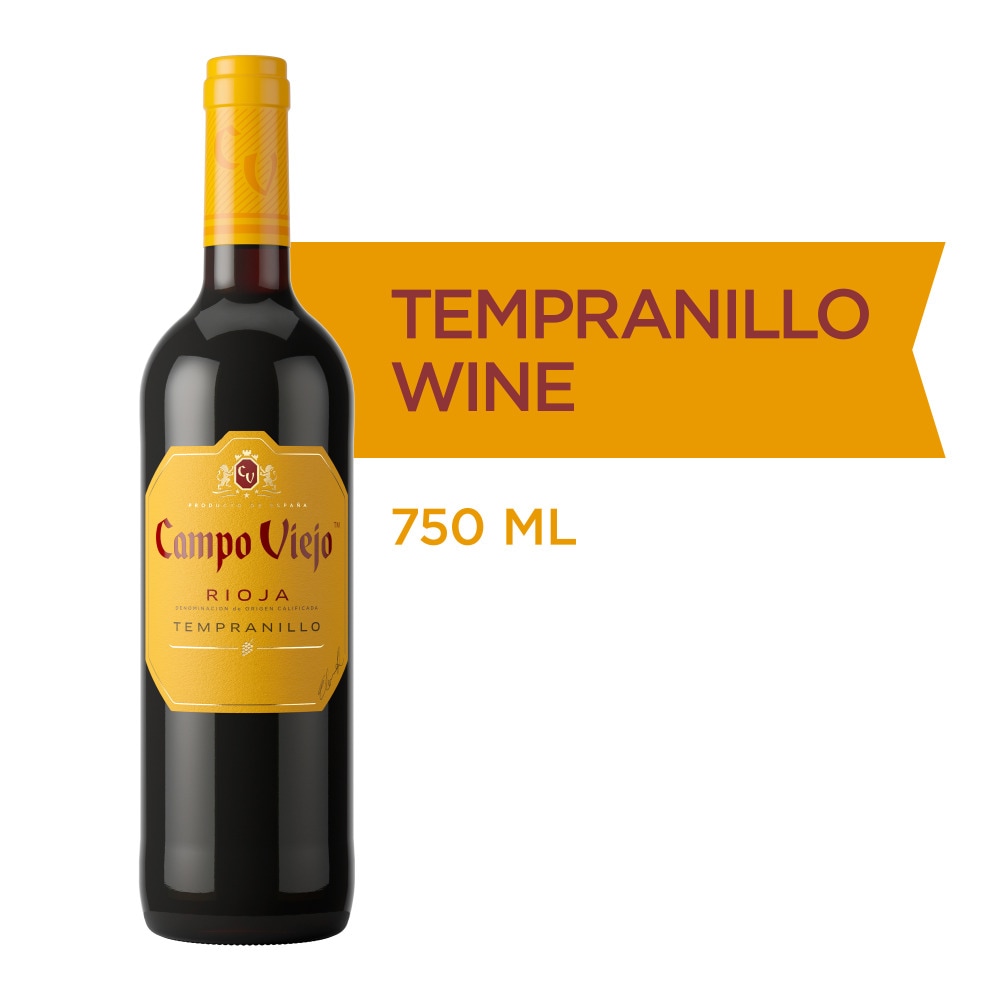
What to expect in the glass.
Here is the style this wine is meant to have, based on its region and how it was made.
Producer description
Rioja rules and product positioning
Our regional and category read
What it costs
Exact regular prices from dated store checks.
- Kroger, Atlanta suburbs, GA$14.99
- Kroger, Cincinnati, OH$12.99
- Kroger, Knoxville, TN$12.99
- Fred Meyer, Portland, OR$18.99
Observed at specific stores; your store will vary. A price target, not an ad.
Campo Viejo is a low-cost doorway into Rioja and one of the smartest teaching bottles in the aisle. Expect youthful red fruit, savory lift and enough regional identity to outperform generic red-blend competition.
Our call combines official producer and regional evidence with the bottle's shopper ratings and category position.
- You want accessible red fruit with savory context
- A regulated regional origin matters
- You want a teaching bottle for Rioja labels
- You expect Reserva complexity at this tier
- You require single-zone or vineyard origin
- You dislike oak-influenced Spanish reds
Serve slightly cool, then adjust to the bottle’s structure.
Build the pairing around its savory red structure: match weight, sweetness and acidity rather than prestige.
Getting to know Rioja DOCa.
Rioja’s name does real legal work, but a generic Tempranillo is not automatically Crianza. Classification must come from the label, not from the region’s reputation for oak aging.
What the name means
Spain’s qualified denomination of origin, with regulated origin and labeling plus separate place- and aging-based classifications.
How grapes grow here
Atlantic and Mediterranean influences meet across Rioja’s three broad zones, creating meaningful variation in ripeness and freshness.
What lies under the vines
Clay-limestone, clay-ferrous and alluvial settings recur across the denomination; a generic regional bottling can blend across them.
How large the region is
- Bottle test
- We haven't confirmed the vintage, back-label seal, or aging category on the bottle.
Places within the region
- Classification
- Generic, Crianza, Reserva and Gran Reserva communicate different aging requirements; never upgrade a bottle by implication.
About this bottling
This bottle is valuable because Rioja’s regulatory vocabulary can prevent lazy assumptions. Tempranillo and Rioja do not automatically mean Crianza or extended oak aging.
Winemaking
The producer says: 100% Tempranillo. Exact shelf vintage, maturation and classification have not yet been confirmed from the release and back-label seal.
Taste
Producer taste language is treated as expected style pending bottle and independent tasting.
Campo Viejo
Corporate ownership is recorded separately; Campo Viejo is the named producer for this projection.
Campo Viejo’s modern Rioja identity is built around accessible expressions and a large purpose-built winery.
The current product page identifies the wine as 100% Tempranillo; physical label classification remains essential.
- Composition
- 100% Tempranillo from the producer
- Classification
- Do not infer Crianza; we have not confirmed the bottle label and Rioja seal we checked this
Where this information comes from.
We researched this release from the producer's own material and current store listings. We haven't held this exact bottle yet. When we do, we'll say so.
SourcePublisher / how strong the source isChecked
Rioja origin and aging classification ↗
Consejo Regulador DOCa Riojaregional authority
Campo Viejo Tempranillo ↗
Campo Viejoproducer
Launch assortment rating snapshot
Kroger retailer feedDated product-level signal; vintage and unique audience are not established.
Front, back, fine print.
The label, the barcode and the fine print, captured so you can read what the bottle actually says.