Our take
14 Hands Chardonnay Washington White Wine
- Style
- White wine
- Size
- 750 ml
- Grape
- Chardonnay
- Region
- Washington State
- Shelf barcode
- 0088586001765
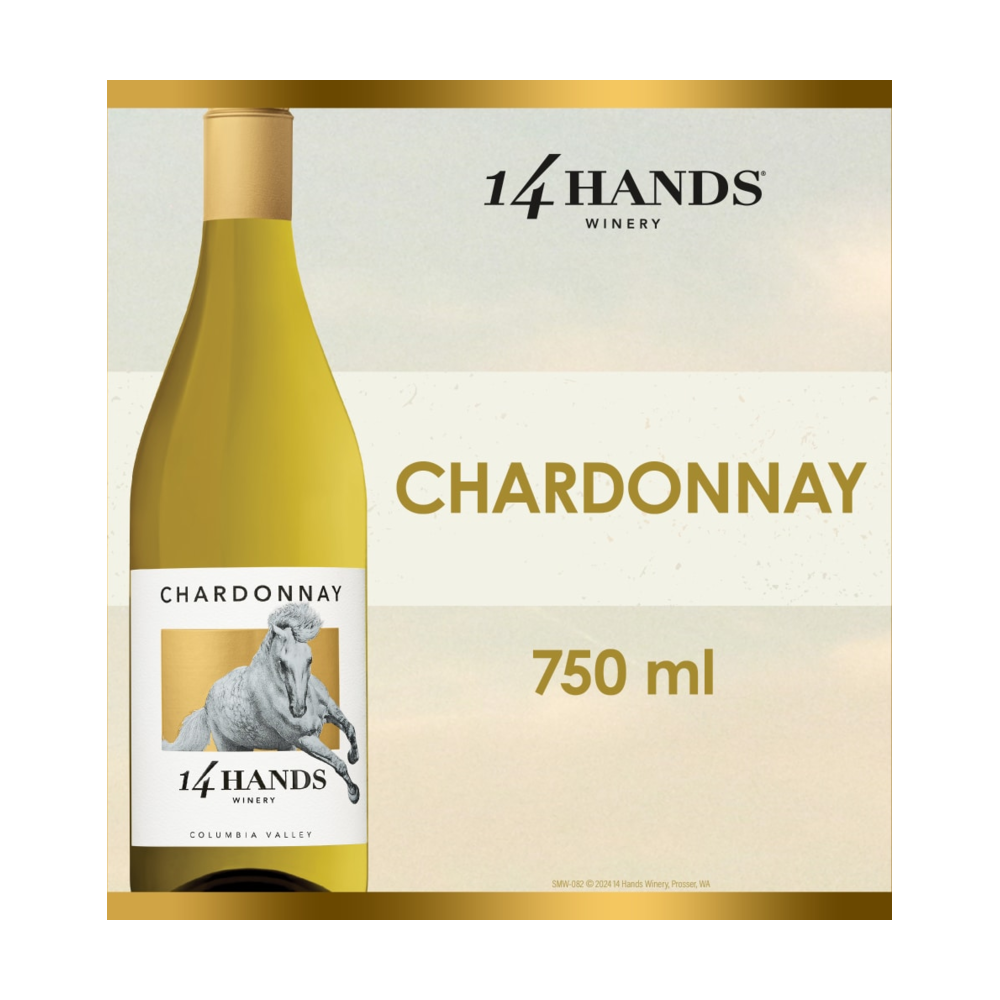
Our take
What we make of this bottle
The grape and the state are named, but a question that shapes how this wine tastes is left unconfirmed: whether the Chardonnay was aged in oak or left out of it. Price is the part that pins down easily. Our September 2026 checks found it from $10.99 to $19.99.
That question matters because how a Chardonnay is made shapes its style. Official category guides say the grape made without oak stays lighter, while oak and time on the spent yeast can add toast, spice and a rounder texture. Those same guides expect a cool-climate Chardonnay to lean citrus and apple and a riper one to lean stone or tropical fruit, and they treat the oaky, weightier style as a choice the winery makes rather than a promise the grape keeps. The producer's own account does not settle it either: 14 Hands calls this its lighter style Chardonnay, while a retailer's tasting notes for the same wine mention oak and vanilla from aging, so that choice is still the thing to ask a shelf attendant about if it decides your pick.
As of August 12, 2026, 5 shoppers have rated it. Their average is the top of the scale, 5 out of five, which sits above 4.71, the median rating among the wines we cover.
The origin needs the same second look. Washington on a label names a whole state, not a single growing district, and official regional guides are candid that the address stays broad: they count 21 federally recognized growing areas inside its borders, a few shared with Oregon, and conditions shift with elevation, wind and frost from one to the next. Most of the vines sit inland, past the Cascade Range, where the mountains hold back the Pacific rain and leave dry ground, warm afternoons and cool nights. As those guides put it, the word on the label marks the state and its many growing areas; the producer's own page, though, does answer the narrower question, naming Columbia Valley as this Chardonnay's specific growing area.
The name traces to a specific measure: 14 Hands takes its name from the height of the wild horses that once roamed the Columbia River Valley, a 'hand' being the width of a palm, and the producer's own account ties the brand to that landscape's loamy sand and gravel soils. Ste. Michelle Wine Estates owns the winery, based in Prosser, Washington. On the oak question, the sources disagree in more detail than the state name reveals: the producer's own page calls this 'our lighter style Chardonnay' and lists only floral, melon, apple and pear notes, with no mention of oak, while a retailer's tasting note for the same wine describes 'subtle notes of vanilla and oak derived from careful aging.' The producer's technical spec lists 13.5 percent alcohol.
Our call: a solid buy if a named winery, a specific growing region and a full shopper history are what convince you; 14 Hands names Columbia Valley as the growing area, Ste. Michelle Wine Estates as the owner, and the 5 shoppers on record have rated it at the top of our scale. Pass if you need a settled answer on oak before you buy; the producer's own copy calls this a lighter style, but a retailer's tasting notes for the same bottle mention vanilla and oak from aging, and the two accounts do not agree.
The Grocery Store Wine Desk · written Sep 16, 2026 from our research file for this wine. Numbers reflect our latest checks.
More from the desk.
Related bottles with a written overview and a public evidence file.
Chateau Ste Michelle
Read our take →Liquid Light
Liquid Light Chardonnay Washington White Wine
Read our take →Chateau Ste Michelle
Chateau Ste. Michelle Light Chardonnay Washington White Wine
Read our take →Liquid Light
Liquid Light Sauvignon Blanc Washington Low Calorie Low Sugar Low Carb White Wine
Read our take →Chateau Ste Michelle
Chateau Ste. Michelle Light Sauvignon Blanc Washington White Wine
Read our take →Chateau Ste Michelle
Chateau Ste. Michelle Vintage Select Riesling Washington White Wine
Read our take →The prices we checked
Dated store checks, not a promise about your store.
- Kroger, Atlanta suburbs, GA$13.99
- Kroger, Cincinnati, OH$12.99
- Ralphs, Long Beach, CA$16.99
- Fred Meyer, Portland, OR$19.99
- King Soopers, Colorado Springs, CO$10.99
- Kroger, Richmond, VA$13.99
- QFC, Tacoma, WA$13.99
The regular price can vary by store and date.
Research status
What we are still checking
Our overview above draws on the dated store feed, shopper ratings, our region and grape research, and any sourced producer facts. We are still working to confirm the current release, the full producer record, and the bottle itself, and we update this page as we learn more.
Getting to know Washington State.
A Washington label can point to a large state blend or to a narrower AVA. Most vineyards are east of the Cascade Range, but the exact AVA still matters because elevation, wind, rain and frost exposure change across the state.
What the name means
Washington is a state origin, not one American Viticultural Area. Its wine regions include 21 federally recognized AVAs, some shared with Oregon.
How grapes grow here
The Cascade Range blocks much of the Pacific rain from eastern Washington. That creates generally dry growing conditions with warm summer days, cool nights and winter frost risk, while western sites have stronger marine influence.
What lies under the vines
Flood deposits, windblown silt, sand, gravel and volcanic material occur across Washington wine country. A state name alone does not identify one soil or vineyard setting.
How large the region is
- Recognized AVAs
- 21 wine-growing areas are listed by the Washington State Wine Commission.
- Label resolution
- Washington State is broader than an AVA, so the bottle or producer must establish a more specific place.
Places within the region
- Columbia Valley
- A very large AVA that contains many of Washington's smaller wine regions and crosses into Oregon.
- Yakima Valley and Walla Walla Valley
- Two established AVAs within the broader eastern Washington landscape, each with its own boundaries and local conditions.
Getting to know Chardonnay.
Chardonnay is a white grape used for still and sparkling wine. It can be made without oak for a lighter shape or fermented and aged in oak for more weight.
Category guide
What to expect in the glass
Official category guides place citrus and apple at the cooler end and stone fruit or tropical fruit in riper examples. Oak and time on the spent yeast can add toast, spice and a rounder texture, but those features are winemaking choices rather than a guarantee.
Sources: New Zealand Winegrowers; Napa Valley Vintners. Checked Aug 10, 2026. See all 116 Chardonnay wines we cover →
Where this information comes from
- Store listing
- Price, package, product identifier, and shopper rating. Checked Aug 10, 2026.
- Barcode
- The shelf barcode shown here is computed from the store product identifier. It has not been checked against a bottle.
- Method
- Every price, rating and fact here is a dated observation. How we check.