Our take
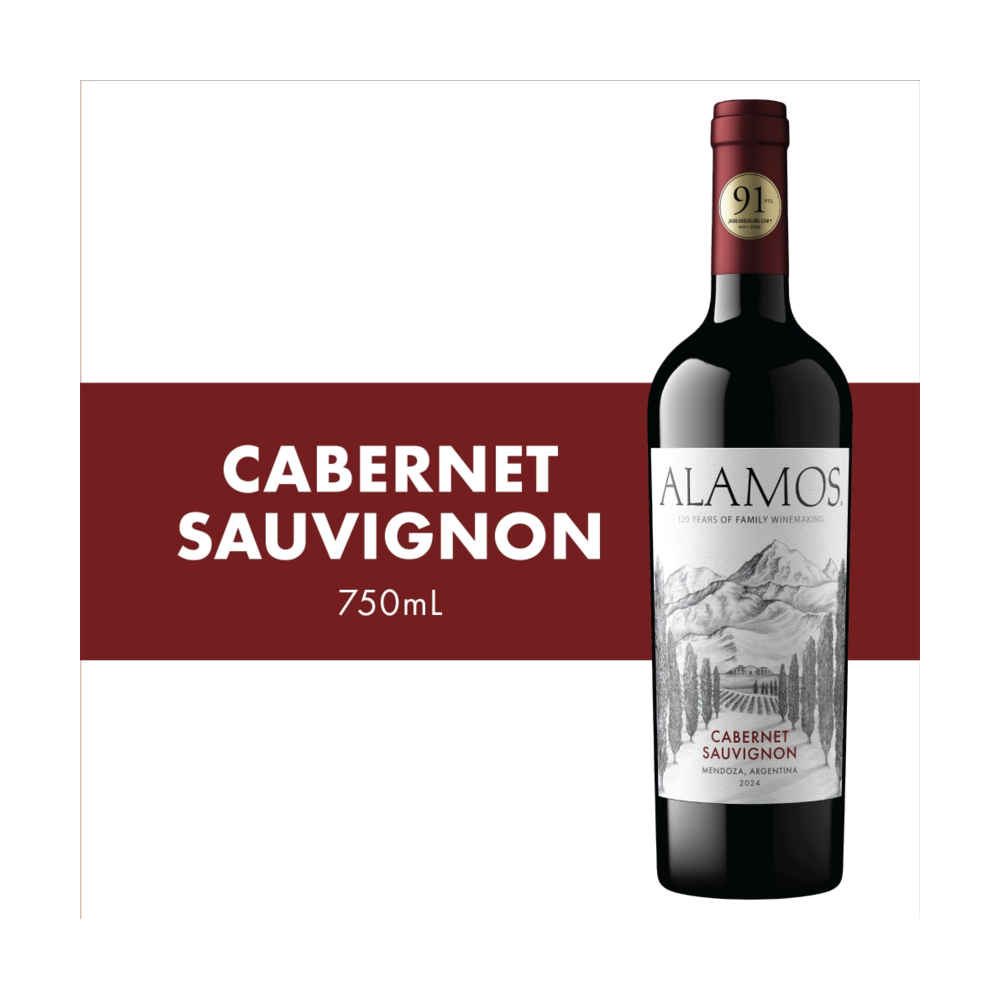
Alamos Cabernet Sauvignon Argentina Red Wine
- Style
- Red wine
- Size
- 750 ml
- Grape
- Cabernet Sauvignon
- Region
- Argentina
- Shelf barcode
- 0085000018170
Our take
What we make of this bottle
Argentina's vineyards run mostly along the base of the Andes. That is the wide address this label gives, and our regional research is quick to widen it further: the country also holds northern valleys, sites to the east, and cooler ground in Patagonia, so a province or a smaller name would tell you more than the word Argentina by itself.
We do not have a shopper rating for this wine. On its own the word Argentina covers a great deal of very different ground.
Where the western vineyards sit, our regional research describes strong sunshine, little rain, and mountain water, with a wide swing between daytime heat and nighttime cool at altitude. The grape is Cabernet Sauvignon, which our grape research calls a firm-built red planted in many regions and a frequent blending partner. Regional guides give it fruit in the black currant and plum range, noticeable tannin, and some oak spice, though ripeness and cellar work can leave it anywhere from herbal and lean to broad and fruit-led.
Across the four stores we checked in September 2026, the price fell between $13.99 and $17.99. Alamos says Mendoza has been the base of its wines for more than a hundred years.
Alamos' own product page describes the winemaking behind this bottle: hand-harvested grapes, a cold soak before fermentation to draw out color and flavor, six to eight days of fermentation in tanks with roughly three weeks of skin contact, and a second, acid-softening fermentation for the entire blend. The producer describes the finished wine as opening with 'aromas of black cherry, brown sugar, and black olive,' with a 'silky, rounded mouthfeel' of black cherry and blackberry, clove and black pepper, the producer's words. An outside reviewer, James Suckling, scored it 90 points in March 2024, calling it a 'fruity cabernet sauvignon' with 'light tannins and a smooth, juicy finish.' The page does not publish an alcohol percentage or the exact blend composition.
Our call: reach for it if an outside critic score is enough evidence for you; James Suckling gave the current vintage 90 points, and Alamos' own account roots the wine in Mendoza's high-altitude vineyards beneath the Andes. Pass if you want your own shoppers' word or the exact blend and alcohol percentage first; no rating for this wine has reached our record, and the producer's page leaves both figures unpublished.
The Grocery Store Wine Desk · written Sep 16, 2026 from our research file for this wine. Numbers reflect our latest checks.
More from the desk.
Related bottles with a written overview and a public evidence file.
Caymus Vineyards
Read our take →Colores Del Sol
Colores Del Sol Argentina Malbec Red Wine
Read our take →Layer Cake Wines
Layer Cake Malbec Argentina Red Wine
Read our take →Trivento
Trivento Reserve Malbec Argentina Red Wine
Read our take →Aconga Wines
Aconga Red Blend
Read our take →Don Miguel Gascon
Don Miguel Gascon Malbec Argentina Red Wine
Read our take →The prices we checked
Dated store checks, not a promise about your store.
- Kroger, Atlanta suburbs, GA$13.99
- Kroger, Cincinnati, OH$14.99
- Ralphs, Long Beach, CA$14.99
- Kroger, Richmond, VA$17.99
The regular price can vary by store and date.
From the producer
Winery home
Alamos says Mendoza has been the base of its wines for more than a century.
Research status
What we are still checking
Our overview above draws on the dated store feed, shopper ratings, our region and grape research, and any sourced producer facts. We are still working to confirm the current release, the full producer record, and the bottle itself, and we update this page as we learn more.
Getting to know Argentina.
Most Argentine vineyards lie in dry western landscapes beside the Andes, but the country also includes northern valleys, eastern sites and cooler Patagonia. A province or smaller indication gives a more useful account of place.
What the name means
Argentina is the country origin. The national wine regulator maintains separate geographical indications and denominations of origin for more precise places.
How grapes grow here
Many western vineyards rely on high sunshine, low rainfall and mountain water, with large day-to-night temperature changes at elevation. Conditions shift with latitude and altitude, especially between the northwest, Cuyo and Patagonia.
What lies under the vines
Alluvial sand, silt, clay, gravel and stones washed from the Andes are widespread, but their depth and mix change by valley. The national name does not establish one soil.
How large the region is
- Origin system
- The Instituto Nacional de Vitivinicultura registers protected geographical indications and denominations of origin.
- Record scope
- This guide covers a country mapping. A province, IG or DOC is needed for a closer regional module.
Places within the region
- Cuyo
- Mendoza and San Juan form the country's largest vineyard concentration.
- Other regions
- The official regional reports also cover the Northwest, Patagonia and additional producing provinces.
Getting to know Cabernet Sauvignon.
Cabernet Sauvignon is a red grape grown in many wine regions. It often makes firmly built wines and is also a common part of red blends.
Category guide
What to expect in the glass
Regional authorities describe black currant, cherry and plum as common fruit references, with noticeable tannin and possible spice from oak. Ripeness, climate and winemaking can move the wine from lean and herbal to broad and fruit-led.
Sources: Napa Valley Vintners. Checked Aug 10, 2026. See all 163 Cabernet Sauvignon wines we cover →
Where this information comes from
- Store listing
- Price, package, product identifier. Checked Aug 10, 2026.
- Barcode
- The shelf barcode shown here is computed from the store product identifier. It has not been checked against a bottle.
- Method
- Every price, rating and fact here is a dated observation. How we check.