Our take
Castle Rock Willamette Valley Pinot Noir
- Style
- Red wine
- Size
- 750 ml
- Grape
- Pinot Noir
- Region
- Willamette Valley
- Shelf barcode
- 0083837006230
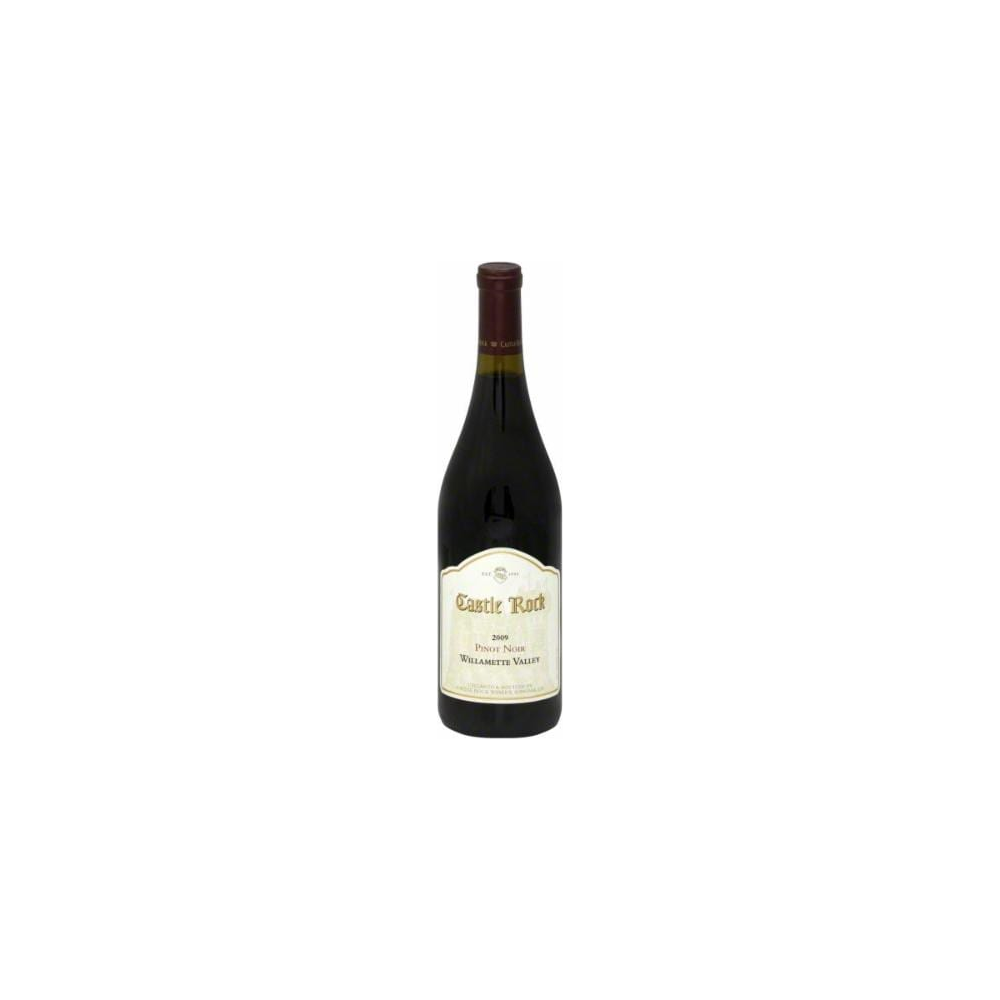
Our take
What we make of this bottle
Pinot Noir is the grape on the label, and though it has no shopper rating in the store listing, the category guides describe the variety clearly enough. They call it a thin-skinned red that shows less color and less tannin than Cabernet Sauvignon, and they commonly find red cherry and plum in it, with a range that shifts from delicate toward fuller and darker with site and ripeness.
The record also gives the Willamette Valley. The valley is a stretch more than a hundred miles long, sitting between the Coast Range toward the Pacific and the Cascades toward the drier interior. Guides describe it as a cool growing climate, and its hills and wind gaps create local differences. The company behind the wine, Castle Rock Winery, says it began in 1994 and works with growers in California, Oregon and Washington. In our September 2026 checks, both store checks recorded $16.99. The valley has itself been a recognized American wine region since 1983, and by the guides' account the eleven smaller districts now within it each point to soil, elevation and wind more precisely than the broad valley name can.
Castle Rock's own product page lists this wine at 13.0 percent alcohol and credits the fruit to Oregon's Willamette Valley, which the winery calls “one of the most prestigious appellations for the cool-climate varietal,” the producer's own description. The tasting note describes aromas of cherry and spice, with berries, cinnamon, black cherry, vanilla and floral notes on the palate and a finish the winery calls “long” and “velvety.” Castle Rock credits Director of Winemaking Meghan Daniels Rech and says it works with roughly 40 grape growers, part of a lean operating model, in the winery's own account, no owned real estate, marketing department or elaborate tasting rooms, which it says is how it holds prices down.
Our call: choose this if the appellation on the label is what you are buying; Castle Rock names Oregon's Willamette Valley specifically, the cool growing region the wine guides describe, and the winery's own tasting note lays out what to expect glass to glass. Pass if you want a shopper rating or a single named vineyard behind that account; neither has reached our record, and the fruit is drawn from vineyards across the valley rather than one site.
The Grocery Store Wine Desk · written Sep 16, 2026 from our research file for this wine. Numbers reflect our latest checks.
More from the desk.
Related bottles with a written overview and a public evidence file.
Willamette Valley Vineyards
Read our take →Stoller Family Estate
Stoller Family Estate Willamette Valley Pinot Noir Oregon Red Wine
Read our take →King Estate
King Estate Willamette Valley Pinot Noir
Read our take →Domaine Roy
Domaine Roy Pinot Noir Willamette Valley Oregon Red Wine
Read our take →La Crema
La Crema Willamette Valley Pinot Noir Oregon Red Wine
Read our take →Willamette Valley Vineyards
Willamette Valley Vineyards Whole Cluster Pinot Noir Oregon Red Wine
Read our take →The prices we checked
Dated store checks, not a promise about your store.
- Kroger, Atlanta suburbs, GA$16.99
- Fred Meyer, Portland, OR$16.99
- Kroger, Richmond, VA$25.99
The regular price can vary by store and date.
From the producer
Production scope
Castle Rock Winery says the company began in 1994 and works with growers in California, Oregon and Washington.
Research status
What we are still checking
Our overview above draws on the dated store feed, shopper ratings, our region and grape research, and any sourced producer facts. We are still working to confirm the current release, the full producer record, and the bottle itself, and we update this page as we learn more.
Getting to know Willamette Valley.
The Willamette Valley runs for more than 100 miles and contains many hillside settings. The AVA establishes origin, but a nested AVA or vineyard gives a closer reading of soil, elevation and wind.
What the name means
Willamette Valley has been a federally recognized American Viticultural Area since 1983. Eleven smaller AVAs now sit within the larger valley boundary.
How grapes grow here
The Coast Range limits direct Pacific influence and the Cascades separate the valley from drier central Oregon. The region has a cool growing climate, but hills, gaps and distance north or south create local differences.
What lies under the vines
Marine sedimentary, volcanic basalt and windblown loess are the three major hillside soil groups identified by the regional association. Valley-floor alluvium adds another setting within the broad AVA.
How large the region is
- Total AVA area
- The Willamette Valley AVA covers about 3,438,000 acres.
- Planted vineyard area
- The regional association reports 33,634 planted vineyard acres in its current facts and figures.
Places within the region
- Northern nested AVAs
- Dundee Hills, Eola-Amity Hills, Ribbon Ridge, Yamhill-Carlton and several newer AVAs identify smaller parts of the valley.
- Regional range
- The main AVA runs from the Portland area south to Eugene, so the valley name does not describe one hillside or mesoclimate.
Getting to know Pinot Noir.
Pinot Noir is a red grape with relatively thin skins. It is used for still red wine and as one of the main grapes in many traditional-method sparkling wines.
Category guide
What to expect in the glass
Regional category guides commonly describe red cherry, berry and plum, with lighter color and less tannin than Cabernet Sauvignon. Site and ripeness can shift it from bright and delicate to darker and fuller.
Sources: New Zealand Winegrowers; Napa Valley Vintners. Checked Aug 10, 2026. See all 105 Pinot Noir wines we cover →
Where this information comes from
- Store listing
- Price, package, product identifier. Checked Aug 10, 2026.
- Barcode
- The shelf barcode shown here is computed from the store product identifier. It has not been checked against a bottle.
- Method
- Every price, rating and fact here is a dated observation. How we check.