Our take
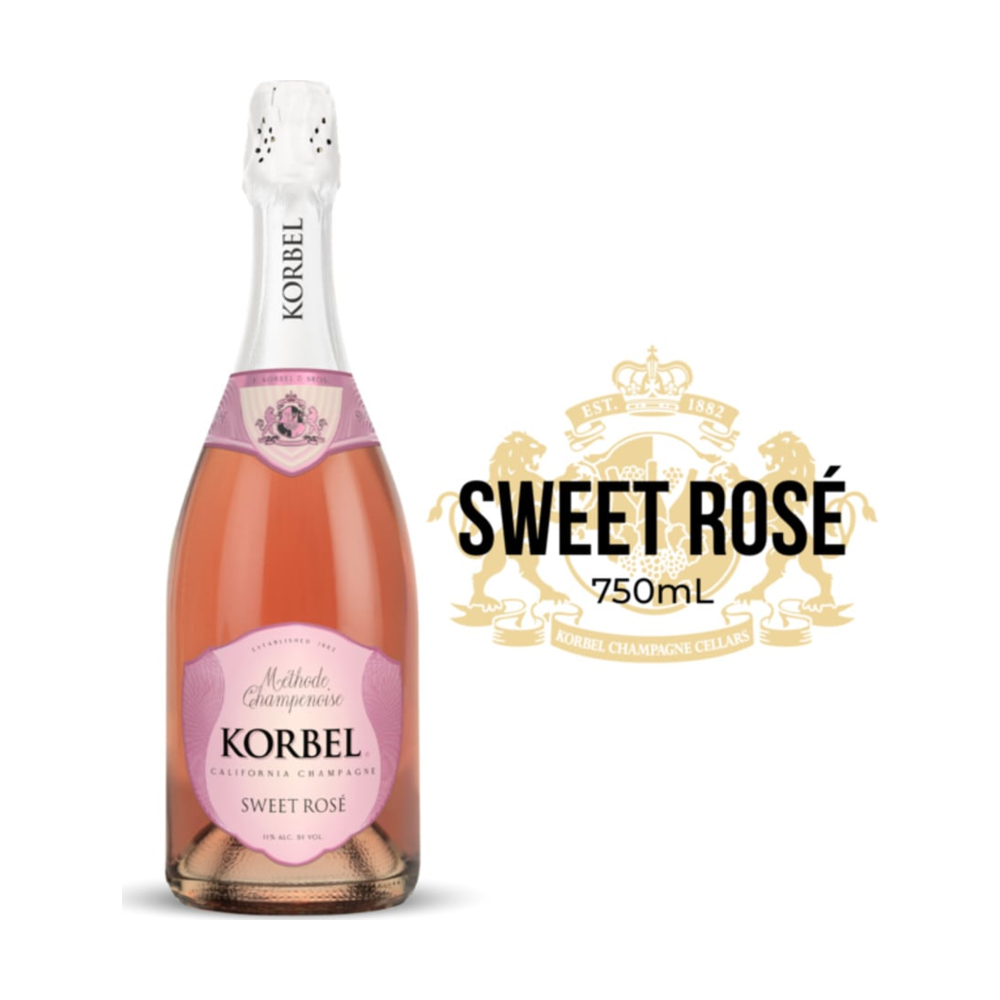
Korbel Sweet Rosé California Champagne
- Style
- Rosé wine
- Size
- 750 ml
- Region
- California
- Shelf barcode
- 0084704097979
Our take
What we make of this bottle
The first word to decode in this name is the plainest one: Sweet. If the table you are planning splits between dry drinkers and sweet ones, the name has already answered for this bottle. The next two words need more explanation. Champagne shares the line with California, and California is the region we confirmed, so we read this as a California sparkling wine; that reading is ours. Beyond the name, the grapes are no longer a blank: the producer’s own technical sheet, detailed below, names all five.
Those numbers are worth setting out. The rater count is 50, and among the 483 wines carrying scores here, most show fewer than that; the average, 4.64 stars. It comes as a standard 750 ml bottle, tagged at $17.99 in the four stores where our checks found it. Both those price tags and the shopper figures were read on August 12, 2026.
Korbel's own technical sheet fills in what the record above could not: Sweet Rosé blends Pinot Noir, Zinfandel, Sangiovese, Gamay and Chenin Blanc, all fermented in stainless steel. The winery explains what each grape contributes, bright acidity from the Pinot Noir, Gamay and Zinfandel, deeper color and aroma from the Sangiovese, and a soft, balanced finish from the Chenin Blanc. The finished wine carries 7 grams per litre of acid at a pH of 3.25, 11 percent alcohol, and a dosage, the sugar added at bottling, of 6 percent, a relatively generous addition that matches the Sweet name on the label.
The California and Champagne pairing in the name has a specific legal history behind it: an independent reference for the winery states that U.S. Treasury regulations dating to the 1930s let American producers keep using Champagne as a semi-generic style term, Korbel among them, as long as the label also names the true origin, which here is California. The winery's own pages add that it has produced California méthode champenoise wine for 142 years, and under chairman Gary Heck the operation's annual production passed 1.5 million cases, which the winery's own account calls the largest méthode champenoise output in the country.
Our call: buy it for the volume of opinion behind it, and now for the producer's own account as well; this bottle carries one of the larger rating pools we track, and Korbel's technical sheet names all five grapes in the blend, states an 11 percent alcohol finish, and traces the California Champagne name to a specific legal allowance the winery has used for decades. Pass if the crowd's average is what decides it for you; even with one of the larger pools we track, this bottle's average sits below the middle of the rated wines we cover.
The Grocery Store Wine Desk · written Aug 17, 2026 from our research file for this wine. Numbers reflect our latest checks.
More from the desk.
Related bottles with a written overview and a public evidence file.
Barefoot
Read our take →Summer Water
Summer Water Rose Wine
Read our take →Chloe
Chloe Blend California Rose Wine
Read our take →Josh Cellars
Josh Cellars Blend California Rose Wine
Read our take →Schramsberg Vineyards
Schramsberg Brut Rose North Coast California Sparkling Wine
Read our take →Schramsberg Vineyards
Mirabelle Brut Rose North Coast California Sparkling Wine
Read our take →The prices we checked
Dated store checks, not a promise about your store.
- Kroger, Atlanta suburbs, GA$17.99
- Ralphs, Long Beach, CA$17.99
- Kroger, Knoxville, TN$17.99
- Kroger, Richmond, VA$24.99
The regular price can vary by store and date.
Research status
What we are still checking
Our overview above draws on the dated store feed, shopper ratings, our region and grape research, and any sourced producer facts. We are still working to confirm the current release, the full producer record, and the bottle itself, and we update this page as we learn more.
Getting to know California.
California on the label is useful provenance but weak detail about place. For these wines, sourcing disclosure, blend construction and house-style consistency carry more decision value than a generic climate paragraph.
What the name means
A state-level appellation, broader than an individual American Viticultural Area. It permits a multi-region blend and does not by itself identify one climate or soil.
How grapes grow here
The state spans cool maritime zones and hot inland valleys. A California designation alone does not reveal which conditions shaped the fruit.
What lies under the vines
At state scale, sourcing and house-style construction matter more than any single soil story.
How large the region is
- Reusable question
- Which counties or AVAs supplied the blend, and did that mix change by release?
Places within the region
- Resolution limit
- County, AVA and vineyard claims begin only when the release names them.
Where this information comes from
- Store listing
- Price, package, product identifier, and shopper rating. Checked Aug 10, 2026.
- Barcode
- The shelf barcode shown here is computed from the store product identifier. It has not been checked against a bottle.
- Method
- Every price, rating and fact here is a dated observation. How we check.