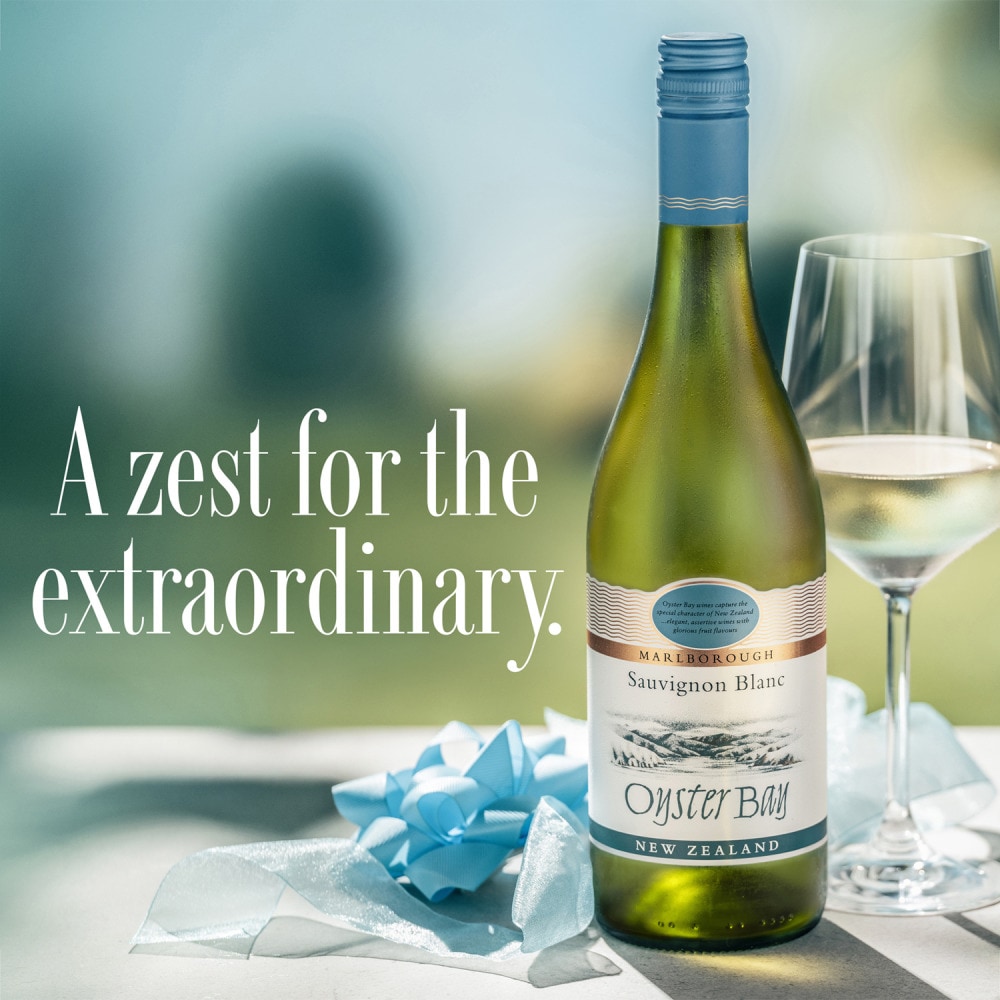
Producer technical sheet
The Grocery Store Wine verdict
Oyster Bay
Sauvignon Blanc
Oyster Bay is our value pick: dry, brisk and citrus-led, with enough technical detail to prove the style is intentional. It gives up some crowd-score strength to Kim Crawford and wins the sharper buying case.
- Region
- Marlborough
- Grape
- Sauvignon Blanc
- The release we researched
- 2024
- Price context
- 10 exact store checks below
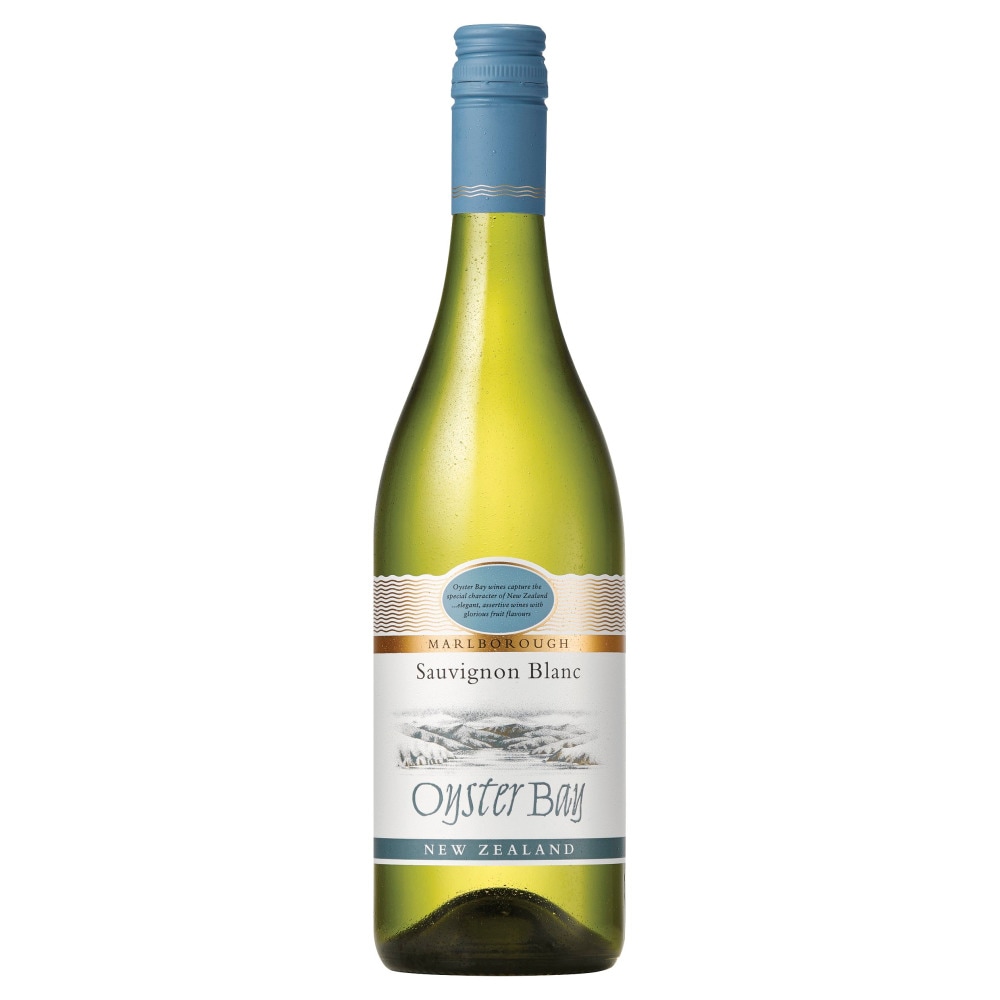
What to expect in the glass.
Here is the style this wine is meant to have, based on its region and how it was made.
13.0% ABV, stainless-steel production and producer style
7 g/L TA and pH 3.2
Producer FAQ and stainless-steel technical record
The producer's defining flavor profile
Our read of the published house style
Chemistry, production and producer description
Three positive public rating snapshots
What it costs
Exact regular prices from dated store checks.
- Kroger, Atlanta suburbs, GA$13.99
- Kroger, Cincinnati, OH$15.99
- Kroger, Knoxville, TN$16.99
- Kroger, Richmond, VA$21.99
- King Soopers, Colorado Springs, CO$14.99
- Fry's, Tucson, AZ$15.99
- Smith's, Las Vegas, NV$18.49
- Fred Meyer, Portland, OR$22.99
- QFC, Tacoma, WA$17.99
- Ralphs, Long Beach, CA$19.99
Observed at specific stores; your store will vary. A price target, not an ad.
Oyster Bay is the smarter evidence-first choice today. It discloses where the fruit came from, when it was picked, how it was fermented and what the finished wine measures.
Our call is anchored by a full 2024 technical sheet, regional context, price evidence and shopper ratings.
Compare the two bottles- You want a release whose producer reports 3 g/L residual sugar and high acidity
- Technical transparency matters to you
- You prefer a direct Wairau–Awatere regional blend over brand mystique
- You dislike sharply refreshing, citrus-led whites
- You are looking for oak texture or a broad creamy style
- You need proof that the current shelf bottle is the researched 2024 release
Start well chilled, around 44–47°F; avoid over-icing, which can erase the aromatic detail.
Shellfish, sushi, fresh cheeses, green vegetables, Thai herbs and lighter fish dishes suit the expected dry, brisk structure.
Getting to know Marlborough.
Marlborough is not a generic synonym for punchy Sauvignon Blanc. It is a large, internally varied cool-climate region whose sunlight, low rainfall, free-draining ground and subregional differences give producers useful blending choices.
What the name means
Registered New Zealand wine GI 1004 since 26 February 2018; renewed through July 2032.
How grapes grow here
New Zealand Winegrowers describes a cool climate with high sunshine and low rainfall. Warm, bright days build aroma and flavor while cool nights help retain acidity; the tradeoff is that frost, drought and harvest weather remain real vintage variables.
What lies under the vines
Free-draining, moderately fertile alluvial soils are common, but the region is not uniform. The Southern Valleys carry more clay than the Wairau plain, while river gravels and sandy loams recur through central Wairau sites.
How large the region is
- Producing vineyard area, 2024
- 30,444 hectares
- Sauvignon Blanc area, 2024
- 25,156.78 producing hectares
- Industry sustainability context
- 98% of New Zealand's producing vineyard area is SWNZ certified; bottle-level certification still requires bottle-level evidence.
Places within the region
- Wairau Valley
- The broad valley floor and river terraces at the center of Marlborough's modern Sauvignon Blanc story.
- Awatere Valley
- A cooler, windier southern valley that gives producers a contrasting component for regional blends.
- Southern Valleys
- Omaka, Fairhall, Brancott, Ben Morvan and Waihopai; generally heavier and more clay-influenced than Wairau soils.
A smaller Marlborough harvest after encouraging pre-harvest signals.
The pre-harvest read was unusually clean: El Niño brought warmth and sunshine, post-flowering weather was close to ideal, and disease pressure was low. The catch was quantity, not an obvious quality collapse: a lighter crop was expected before harvest.
Marlborough ultimately harvested 312,812 tonnes, 21% below the previous vintage. It still accounted for 81.8% of the national survey harvest. That combination (smaller crop, generally favorable ripening signals) supports optimism, but not a blanket verdict on every bottle.
- Marlborough harvest
- 312,812 tonnes
- Change from 2023
- Down 21%
- Share of NZ survey harvest
- 81.8%
About this bottling
This is what a mass-market dossier looks like when a producer publishes a real technical sheet: sites, vine age, harvest window, clones, fermentation temperature and finished-wine chemistry turn a flavor promise into a testable release record.
Winemaking
Fruit came from Wairau and Awatere Valley sites. It was destemmed and tank-pressed; free-run juice was separated, clarified and fermented with selected yeasts in stainless steel at 12–14°C, followed by short lees contact, blending and early bottling.
Taste
Tropical fruit, bright citrus and a zesty finish over a brisk frame supported by pH 3.2 and 7 g/L total acidity.
Oyster Bay
Owned and operated by New Zealand producer Delegat Limited.
Oyster Bay released its first vintage in 1990. The producer still describes the business as the same family from the beginning, now operating at international scale without a reserve tier.
The brand's proposition is disciplined fruit preservation: cool-climate sourcing, stainless-steel fermentation and early bottling rather than a hierarchy of reserve labels. Delegat's 2025 report confirms Oyster Bay is a large, internationally distributed premium brand.
- Vineyard origin
- Wairau Valley and Awatere Valley; central Wairau, Renwick and Brancott soils from the producer
- Vines and material
- 4–26-year-old vines; Bordeaux and UCD1 clones on medium-to-low-vigor rootstocks from the producer
- Harvest
- 13 March–1 April 2024; weighted average 21.9° Brix, TA 10.2 g/L, pH 3.07 from the producer
- Finished wine
- 13.0% alcohol; 3 g/L residual sugar; 7 g/L total acidity; pH 3.2 from the producer
Where this information comes from.
We researched the 2024 release from the producer's own record and current store listings. We haven't held this exact bottle yet. When we do, we'll say so.
SourcePublisher / how strong the source isChecked
Marlborough geographical indication register ↗
Intellectual Property Office of New Zealandregulator
Marlborough wine region ↗
New Zealand Winegrowersregional authority
New Zealand Winegrowers Vineyard Report 2024 ↗
New Zealand Winegrowersregional authority
Vintage Indicators 2024 ↗
New Zealand Winegrowersregional authority
Grape expectations for the 2024 harvest ↗
New Zealand Winegrowersregional authority
Sustainable Winegrowing New Zealand ↗
New Zealand Winegrowersregional authority
Marlborough Sauvignon Blanc ↗
Oyster Bay Winesproducer
Sauvignon Blanc 2024 technical information ↗
Oyster Bay WinesUK technical sheet for the 2024 release.
Sauvignon Blanc 2023 technical information ↗
Oyster Bay WinesOyster Bay Marlborough Sauvignon Blanc 2023 release
Sauvignon Blanc 2025 technical information ↗
Oyster Bay WinesOyster Bay Marlborough Sauvignon Blanc 2025 release
Oyster Bay wine FAQ ↗
Oyster Bay WinesCurrent producer process and nutrition statements; not proof of a particular bottle
Our story ↗
Oyster Bay Winesproducer
Delegat Group Annual Report 2025 ↗
Delegat Groupcorporate filing
Retailer catalog and rating snapshot
Kroger retailer feedA dated check, not a permanent product truth or our rating.
Oyster Bay Sauvignon Blanc retailer listing ↗
TargetUS multi-vintage product listing; vintage not established
Oyster Bay brand retailer listing ↗
Total Wine & MoreUS product-family listing; vintage and market price vary
The release changed. Here is how.
Technical details published by the producer across nearby Oyster Bay releases. This shows how the wine changed over time.
VintageHarvestABVRSTApH
202321 March–14 April12%4 g/L8 g/L3.4
202413 March–1 April13%3 g/L7 g/L3.2
202510 March–10 April12%4 g/L7 g/L3.2
Front, back, fine print.
The label, the barcode and the fine print, captured so you can read what the bottle actually says.