Our take
Chateau Ste. Michelle Cabernet Sauvignon Washington Red Wine
- Style
- Red wine
- Size
- 750 ml
- Grape
- Cabernet Sauvignon
- Region
- Washington State
- Shelf barcode
- 0088586601835
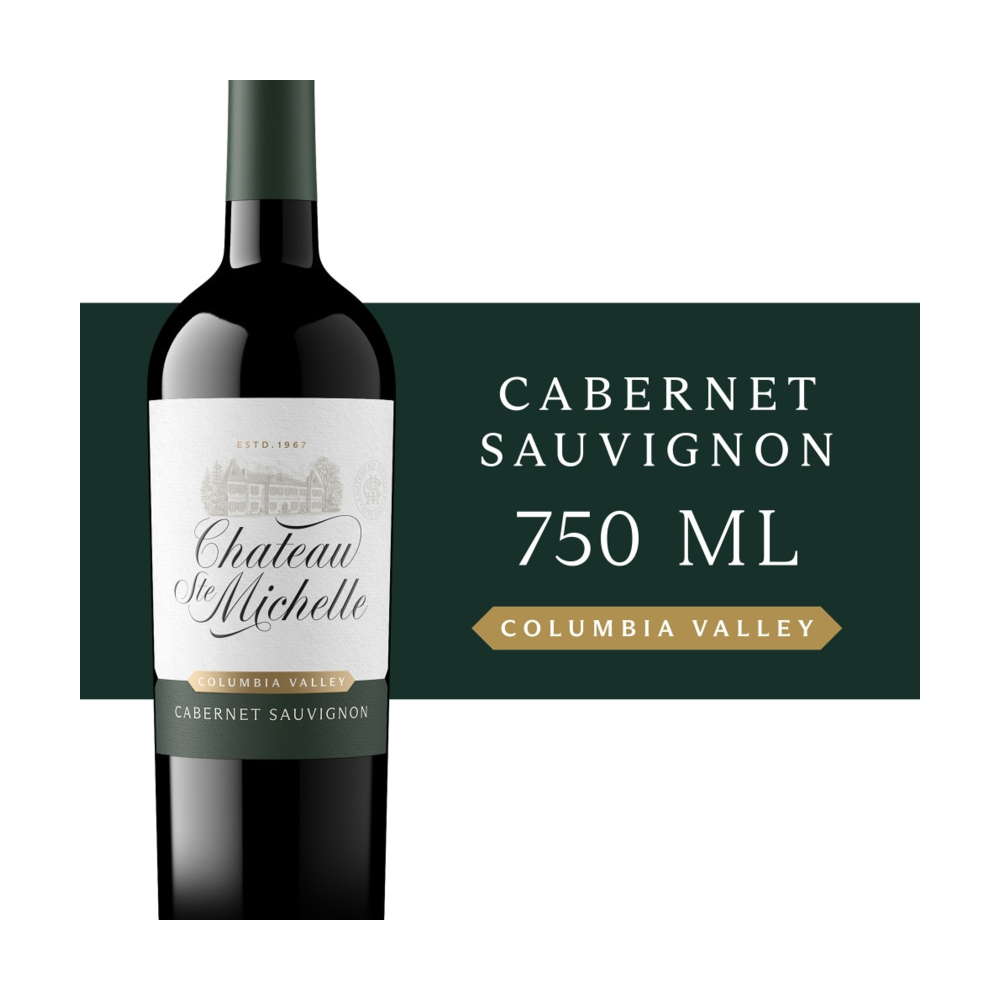
Our take
What we make of this bottle
So the number to square with first is the score, which at 4 out of five sits low among the wines we track. That reading rests on a thin sample, since the number of shopper ratings so far is 1, so treat it as an early signal rather than a settled verdict.
Chateau Ste. Michelle says it was established in 1967 as Washington's first premium winery, built in Woodinville, and its own site adds that the Wyckoff family bought the winery in 2025, returning it to local ownership after 50 years. Both facts describe the winery, not this particular bottle. In our September 2026 checks the lowest observed price was $14.99 and the highest was $22.99.
Washington on a label names a state origin rather than one growing area, and official guides count 21 recognized growing areas within it, a few shared with Oregon. Most of its vineyards lie east of the Cascade Range, which shields them from much of the Pacific rain and leaves warm days, cool nights and a winter frost risk.
On the grape itself, Cabernet Sauvignon is a widely grown red that tends toward firm structure and shows up often in blends. Wine authorities list black currant, cherry and plum among its common fruit references, with firm tannin and a possible oak spice, and they note that ripeness, climate and cellar choices can send it anywhere between lean and herbal and broad and fruit-forward.
Chateau Ste. Michelle's own technical page for this bottling lists a blend of 82 percent Cabernet Sauvignon with 6 percent Syrah, 5 percent Malbec and 7 percent other red varieties, at 13.5 percent alcohol. The winemaking notes state 24 months in oak, split between new and neutral barrels plus a stainless-steel portion, 20 percent new oak, 46 percent neutral oak and 34 percent stainless, in the winery's own figures. The producer's tasting note describes the wine as “rich with red fruit flavor,” with “complexity and structure,” and “concentrated Washington red fruit in an accessible style,” the producer's words.
Our call: worth a try if you want documented detail behind an everyday Cabernet; Chateau Ste. Michelle publishes the exact blend, the oak program, and the acid and alcohol numbers for this bottling, real detail beyond what the shelf label states. Pass if you are leaning on the shopper score; the rating on our record so far reflects a single shopper, not a settled read, and it sits low among the wines we track.
The Grocery Store Wine Desk · written Sep 16, 2026 from our research file for this wine. Numbers reflect our latest checks.
More from the desk.
Related bottles with a written overview and a public evidence file.
Chateau Ste Michelle
Read our take →K Vintners Wines
Substance Cabernet Sauvignon Washington State 750 ml
Read our take →Intrinsic Wine
Intrinsic Cabernet Sauvignon Washington Red Wine
Read our take →Acre & Vine
Acre & Vine Washington Cabernet Sauvignon Red Wine
Read our take →H3
H3 Cabernet Sauvignon Washington Red Wine
Read our take →14 Hands
14 Hands Cabernet Sauvignon Washington Red Wine
Read our take →The prices we checked
Dated store checks, not a promise about your store.
- Kroger, Atlanta suburbs, GA$17.49
- Kroger, Cincinnati, OH$15.99
- Ralphs, Long Beach, CA$18.99
- Fred Meyer, Portland, OR$22.99
- King Soopers, Colorado Springs, CO$14.99
- Smith's, Las Vegas, NV$20.49
- Kroger, Knoxville, TN$15.99
- Kroger, Richmond, VA$15.99
- Fry's, Tucson, AZ$16.99
- QFC, Tacoma, WA$16.99
The regular price can vary by store and date.
From the producer
Washington's founding winery
Chateau Ste. Michelle says it was established in 1967 as Washington state's first premium winery, built in Woodinville. The winery's own site also says the Wyckoff family bought Chateau Ste. Michelle in 2025, returning it to local ownership for the first time in 50 years.
Research status
What we are still checking
Our overview above draws on the dated store feed, shopper ratings, our region and grape research, and any sourced producer facts. We are still working to confirm the current release, the full producer record, and the bottle itself, and we update this page as we learn more.
Getting to know Washington State.
A Washington label can point to a large state blend or to a narrower AVA. Most vineyards are east of the Cascade Range, but the exact AVA still matters because elevation, wind, rain and frost exposure change across the state.
What the name means
Washington is a state origin, not one American Viticultural Area. Its wine regions include 21 federally recognized AVAs, some shared with Oregon.
How grapes grow here
The Cascade Range blocks much of the Pacific rain from eastern Washington. That creates generally dry growing conditions with warm summer days, cool nights and winter frost risk, while western sites have stronger marine influence.
What lies under the vines
Flood deposits, windblown silt, sand, gravel and volcanic material occur across Washington wine country. A state name alone does not identify one soil or vineyard setting.
How large the region is
- Recognized AVAs
- 21 wine-growing areas are listed by the Washington State Wine Commission.
- Label resolution
- Washington State is broader than an AVA, so the bottle or producer must establish a more specific place.
Places within the region
- Columbia Valley
- A very large AVA that contains many of Washington's smaller wine regions and crosses into Oregon.
- Yakima Valley and Walla Walla Valley
- Two established AVAs within the broader eastern Washington landscape, each with its own boundaries and local conditions.
Getting to know Cabernet Sauvignon.
Cabernet Sauvignon is a red grape grown in many wine regions. It often makes firmly built wines and is also a common part of red blends.
Category guide
What to expect in the glass
Regional authorities describe black currant, cherry and plum as common fruit references, with noticeable tannin and possible spice from oak. Ripeness, climate and winemaking can move the wine from lean and herbal to broad and fruit-led.
Sources: Napa Valley Vintners. Checked Aug 10, 2026. See all 163 Cabernet Sauvignon wines we cover →
Where this information comes from
- Store listing
- Price, package, product identifier, and shopper rating. Checked Aug 10, 2026.
- Barcode
- The shelf barcode shown here is computed from the store product identifier. It has not been checked against a bottle.
- Method
- Every price, rating and fact here is a dated observation. How we check.