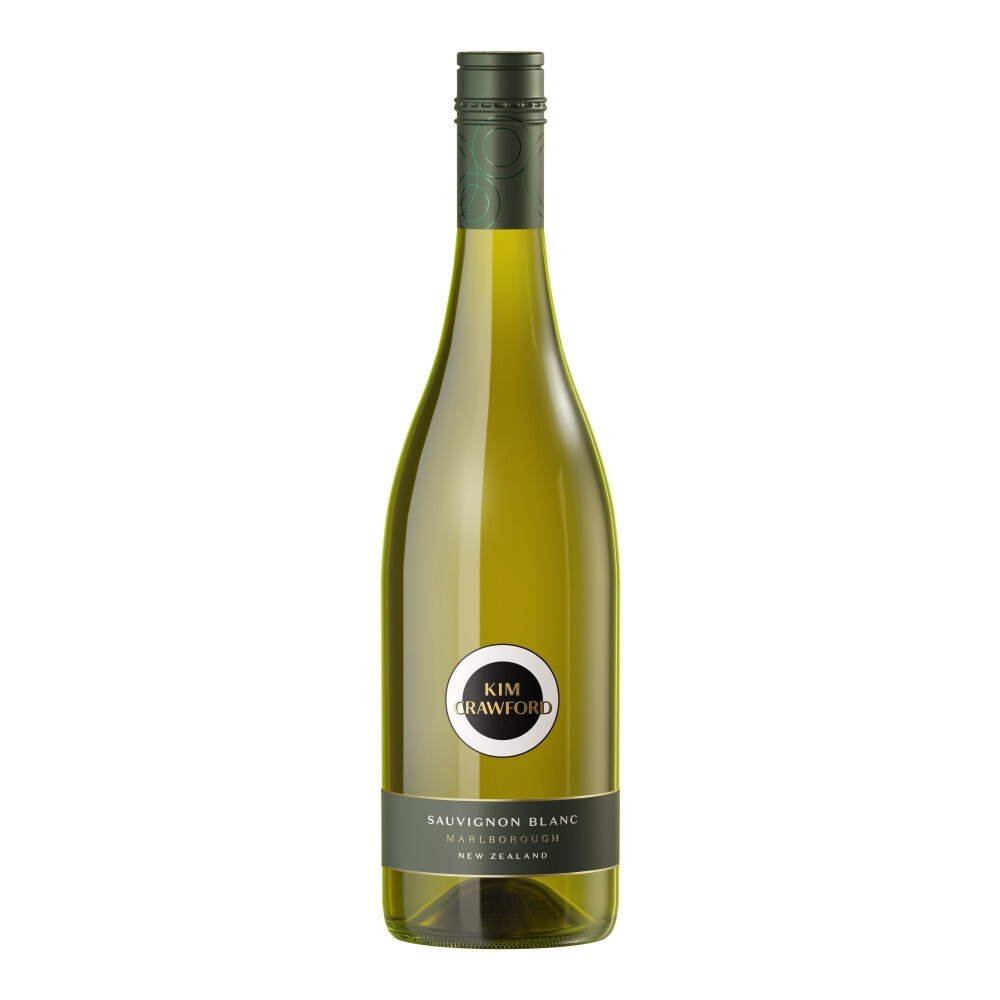
Regional style and the producer's freshness-first positioning
The Grocery Store Wine verdict
Kim Crawford
Sauvignon Blanc
Kim Crawford is the crowd-backed Marlborough benchmark: polished, high-aroma and unapologetically tropical-herbal. It earns its premium when you want the louder house style; Oyster Bay beats it on value and transparency.
- Region
- Marlborough
- Grape
- Sauvignon Blanc
- The release we researched
- 2024
- Price context
- 10 exact store checks below
Our take
What we make of this bottle
Marlborough is the address, and regional guides describe it as a large, cool-climate region with strong sunlight, low rainfall and free-draining ground, where differences from one subregion to another give producers useful blending choices. Our research record confirms the 2024 release comes from there.
Two valleys are involved. Regional guides place the Wairau's broad valley floor and river terraces at the center of Marlborough's modern Sauvignon Blanc story, and the importer states this wine draws on both the Wairau and the neighboring Awatere. Kim Crawford says it picks vineyard sections separately, ferments them in small batches, and blends after tasting. A producer doing that with two valleys is balancing them on purpose.
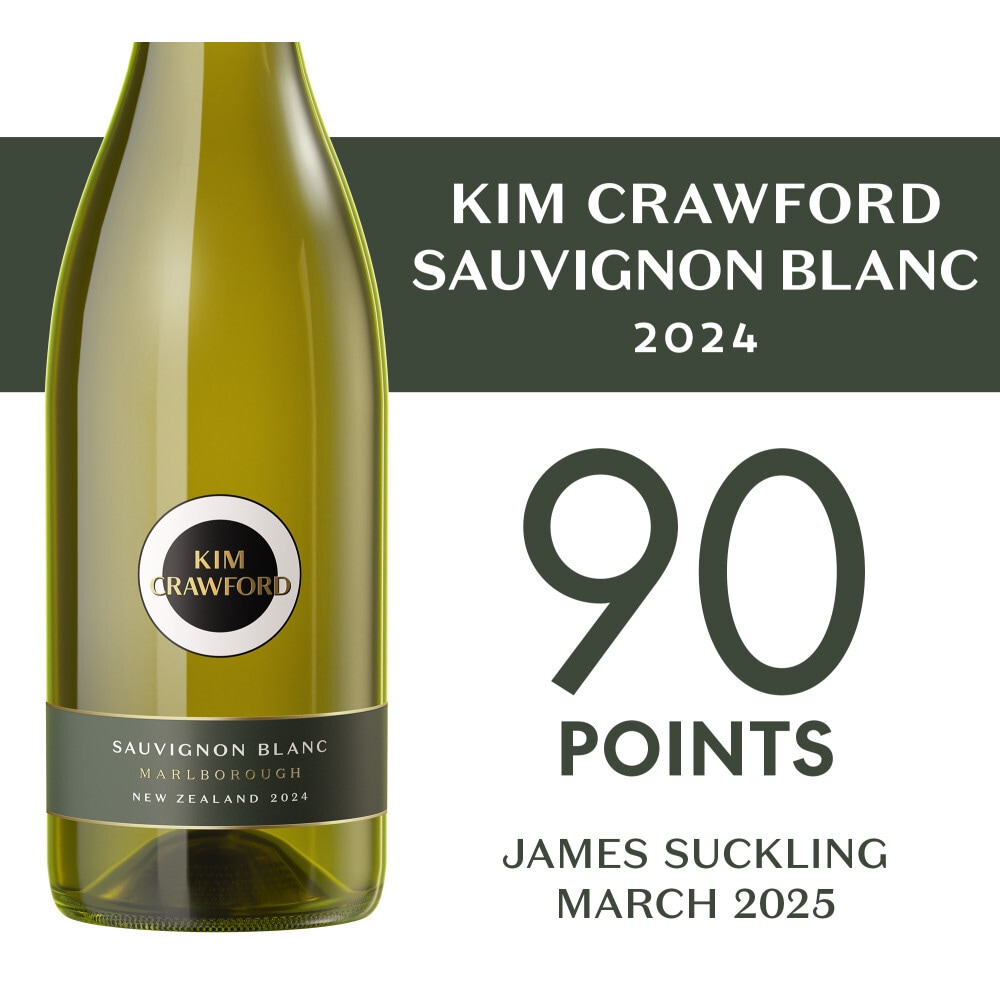
The producer's own description runs to citrus, tropical fruit and crushed herbs. Shoppers rate it 4.7 out of 5 across 889 ratings as of August 11, 2026, and recent reviewers reach for light, clean, crisp. The importer claims 90-point scores from the Tasting Panel and James Suckling, vintage unstated. Those scores are the importer's claims.
One detail does not line up: the importer lists 12.5 percent alcohol here, while a 2025 British trade booklet says 13.5. The two figures may simply belong to different markets or different releases, and we will settle it when we read a bottle in hand. The importer suggests it with summer salads or oysters; the store listing counts 120 calories in a 5-ounce glass. Regular price at our anchor store on August 11 was $18.49, promoted to $12.97 through August 12.
The Grocery Store Wine Desk · written Aug 11, 2026 from our research file for this wine.
What to expect in the glass.
Here is the style this wine is meant to have, based on its region and how it was made.
Producer style and market-package alcohol listing
Producer explicitly claims vibrant acidity; chemistry undisclosed
The house style is built around vivid fruit and acidity
The producer's defining flavor profile
A defining part of the producer's style
The defining Kim Crawford house style
Two high-volume retailer rating snapshots
What it costs
Exact regular prices from dated store checks.
- Kroger, Atlanta suburbs, GA$18.49
- Kroger, Cincinnati, OH$16.99
- Kroger, Knoxville, TN$16.99
- Kroger, Richmond, VA$15.99
- King Soopers, Colorado Springs, CO$13.99
- Fry's, Tucson, AZ$14.99
- Smith's, Las Vegas, NV$20.99
- Fred Meyer, Portland, OR$21.99
- QFC, Tacoma, WA$19.99
- Ralphs, Long Beach, CA$21.99
Observed at specific stores; your store will vary. A price target, not an ad.
Choose Kim Crawford for the louder brand signal and the more extroverted tropical-herbal promise. Do not pay a premium assuming it buys greater transparency. It does not.
Our call combines the producer's style, Marlborough context, available technical detail, price evidence and shopper ratings.
Compare the two bottles- You want the familiar, high-aroma Marlborough house style
- Passion fruit, grapefruit and a herbal snap sound appealing
- You value a larger observed shopper-rating footprint
- You want published residual sugar, acidity and pH
- You dislike forceful citrus-herbal Sauvignon Blanc
- You expect brand recognition to prove the vintage or bottle in front of you
Start well chilled, around 45–48°F; let the glass warm slightly if the aromatics feel muted.
Oysters, goat cheese, herb-heavy salads, asparagus, ceviche and simply grilled seafood match the expected acid-and-aroma profile.
Getting to know Marlborough.
Marlborough is not a generic synonym for punchy Sauvignon Blanc. It is a large, internally varied cool-climate region whose sunlight, low rainfall, free-draining ground and subregional differences give producers useful blending choices.
What the name means
Registered New Zealand wine GI 1004 since 26 February 2018; renewed through July 2032.
How grapes grow here
New Zealand Winegrowers describes a cool climate with high sunshine and low rainfall. Warm, bright days build aroma and flavor while cool nights help retain acidity; the tradeoff is that frost, drought and harvest weather remain real vintage variables.
What lies under the vines
Free-draining, moderately fertile alluvial soils are common, but the region is not uniform. The Southern Valleys carry more clay than the Wairau plain, while river gravels and sandy loams recur through central Wairau sites.
How large the region is
- Producing vineyard area, 2024
- 30,444 hectares
- Sauvignon Blanc area, 2024
- 25,156.78 producing hectares
- Industry sustainability context
- 98% of New Zealand's producing vineyard area is SWNZ certified; bottle-level certification still requires bottle-level evidence.
Places within the region
- Wairau Valley
- The broad valley floor and river terraces at the center of Marlborough's modern Sauvignon Blanc story.
- Awatere Valley
- A cooler, windier southern valley that gives producers a contrasting component for regional blends.
- Southern Valleys
- Omaka, Fairhall, Brancott, Ben Morvan and Waihopai; generally heavier and more clay-influenced than Wairau soils.
A smaller Marlborough harvest after encouraging pre-harvest signals.
The pre-harvest read was unusually clean: El Niño brought warmth and sunshine, post-flowering weather was close to ideal, and disease pressure was low. The catch was quantity, not an obvious quality collapse: a lighter crop was expected before harvest.
Marlborough ultimately harvested 312,812 tonnes, 21% below the previous vintage. It still accounted for 81.8% of the national survey harvest. That combination (smaller crop, generally favorable ripening signals) supports optimism, but not a blanket verdict on every bottle.
- Marlborough harvest
- 312,812 tonnes
- Change from 2023
- Down 21%
- Share of NZ survey harvest
- 81.8%
About this bottling
A regional blend built to deliver the extroverted side of Marlborough Sauvignon Blanc: high aroma, vivid citrus, tropical fruit and a crushed-herb snap. It is a consistency play with unmistakable house style.
Winemaking
Kim Crawford says vineyard blocks are harvested separately, fermented in small lots and blended after tasting. The 2024 product page emphasizes stainless-steel freshness and sustainable practices, but does not publish harvest dates, pH, total acidity or residual sugar.
Taste
Citrus, tropical fruit, crushed herbs, passion fruit, melon and grapefruit, with vivid acidity and a long finish: the profile that defines the brand.
Kim Crawford
A Constellation Brands wine brand.
Launched in an Auckland cottage in 1996. The brand says it rented winery space and purchased vineyards in Marlborough's Waihopai Valley in 2000; it now draws across seven Marlborough subregions for blending options.
The producer frames this as block-by-block selection followed by small-lot fermentation and blending. That is a useful explanation for consistency at scale, though exact blocks and lot proportions are not disclosed for this release.
- Vintage
- 2024 on supplied artwork and producer release page well established
- Alcohol
- 13.5% in a 2025 UK trade booklet; prior US retailer data reported 12.5%. Treat as a market/bottling conflict until the physical bottle is read. sources disagree
- Winemaking detail
- Individual block harvest, small-lot fermentation, post-fermentation blending from the producer
- Published chemistry
- No pH, total acidity or residual sugar found in the primary release sources reviewed we checked this
Where this information comes from.
We researched the 2024 release from the producer's own record and current store listings. We haven't held this exact bottle yet. When we do, we'll say so.
SourcePublisher / how strong the source isChecked
Marlborough geographical indication register ↗
Intellectual Property Office of New Zealandregulator
Marlborough wine region ↗
New Zealand Winegrowersregional authority
New Zealand Winegrowers Vineyard Report 2024 ↗
New Zealand Winegrowersregional authority
Vintage Indicators 2024 ↗
New Zealand Winegrowersregional authority
Grape expectations for the 2024 harvest ↗
New Zealand Winegrowersregional authority
Sustainable Winegrowing New Zealand ↗
New Zealand Winegrowersregional authority
Sauvignon Blanc product page ↗
Kim Crawford Winesproducer
About Kim Crawford ↗
Kim Crawford Winesproducer
New Zealand Wine trade tasting booklet ↗
New Zealand WinegrowersUK trade listing; alcohol can vary by market or bottling.
James Suckling · 90/100 · March 2025 · critic score, brand-published
Kim Crawford WinesClaim displayed in the supplied Kim Crawford campaign artwork
Constellation Brands 2025 Form 10-K ↗
Constellation Brandscorporate filing
Retailer catalog and rating snapshot
Kroger retailer feedA dated check, not a permanent product truth or our rating.
Kim Crawford Sauvignon Blanc retailer listing ↗
TargetUS multi-vintage product listing; vintage not established
Front, back, fine print.
The label, the barcode and the fine print, captured so you can read what the bottle actually says.