Our take
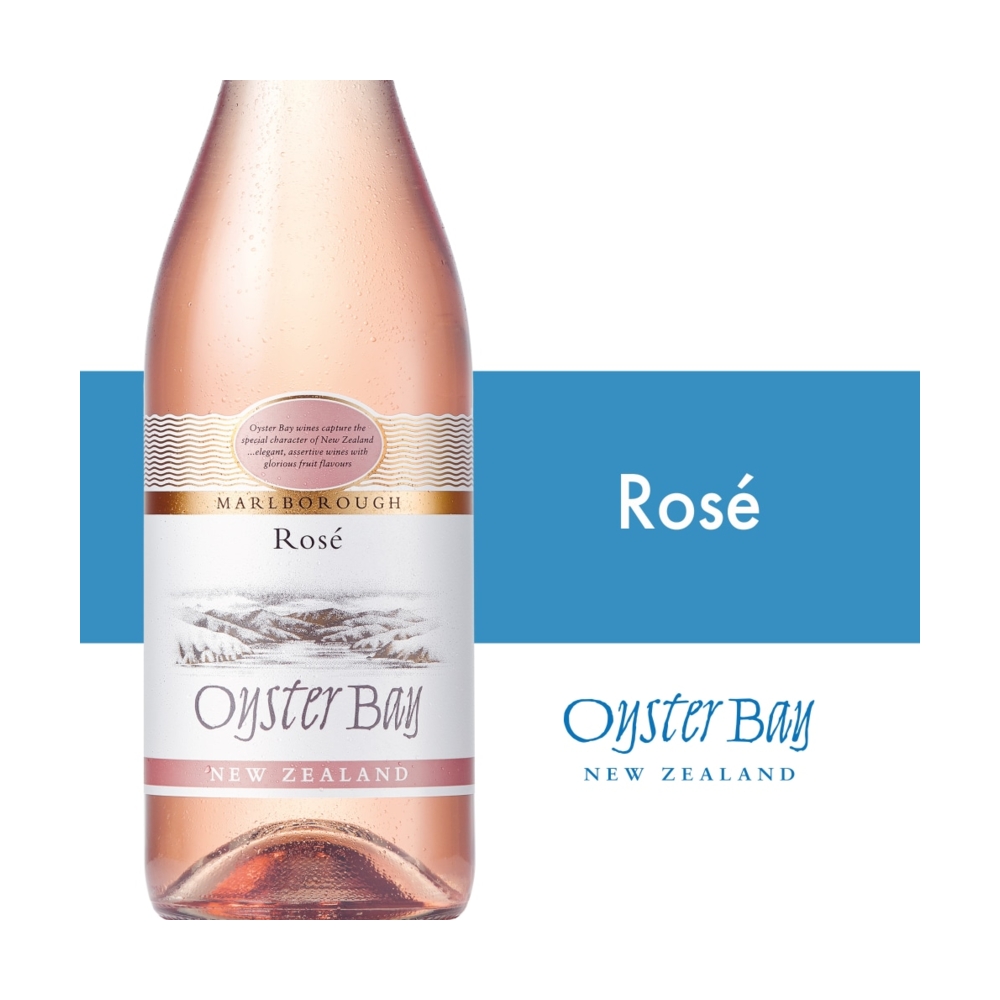
Oyster Bay Rose New Zealand Wine
- Style
- Rosé wine
- Size
- 750 ml
- Region
- New Zealand
- Shelf barcode
- 0870661008055
Our take
What we make of this bottle
Oyster Bay is the name of the producer. It says its first vintage was made in 1990, that one family has run the winery from the start, and that its vineyards sit in New Zealand's Marlborough and Hawke's Bay regions. For this bottle specifically, the producer names the grape: premium Pinot Noir clones, selected and blended for the rosé style. We do not have a shopper rating for this wine.
New Zealand covers a lot of latitude. Official regional guides describe growing areas running about 1,600 kilometres from the top of the country to the bottom, all of them close enough to the sea for maritime weather to matter, with warmer conditions in the north, cooler ones in the south, and mountain ranges casting dry rain shadows over several eastern districts. Those guides add that New Zealand is the country name, while registered regions such as Marlborough and Hawke's Bay, the two the producer points to, give the more exact address.
Among the roses we track, its price sits toward the lower end. In our September 2026 checks it came to $13.99.
Oyster Bay publishes a technical sheet for the rosé too, and the sheet for the current 2025 release is specific: the fruit is Pinot Noir, off vines in the Wairau Valley in Marlborough aged eight to twenty-seven years, and the finished wine lists 12.0 percent alcohol with 4 grams per litre of residual sugar, which in plain terms is a dry wine with just a whisper more softness than bone dry. The winemaking notes state the choices directly: a gentle press, a cool fermentation of about two to two and a half weeks, and a brief spell of time on the spent yeast, without stirring, to build texture, bottled young to keep the fruit fresh. The sheet's own tasting line calls the result 'fragrant summer blossom and red berry fruits, with wonderfully refreshing citrus notes and an elegant texture,' the maker's words, consistent with the pale color and delicate style the rosé promises.
The rosé has picked up outside recognition too. Across recent vintages the producer cites a 93-point score from the New World Wine Awards, a Best Buy notice from Wine Enthusiast, and gold medals from competitions including the San Francisco International and the San Antonio Stock Show and Rodeo, where a recent vintage was also named best rosé in show.
Our call: buy it on the producer's account if that is how you choose; Oyster Bay is unusually complete here too, naming the Pinot Noir clones behind the rosé, the Marlborough vineyard and harvest window, and a run of competition medals and scores across recent vintages. Pass if a shopper rating matters to your decision; we have none on record for this bottle, so the producer's account is carrying the case alone.
The Grocery Store Wine Desk · written Sep 16, 2026 from our research file for this wine. Numbers reflect our latest checks.
More from the desk.
Related bottles with a written overview and a public evidence file.
Martin's Rake
Read our take →McBride Sisters Wine
McBride Sisters Collection Brut Rose Sparkling New Zealand Wine
Read our take →Craggy Range
Craggy Range Te Muna Sauvignon Blanc New Zealand White Wine
Read our take →The Crossings
The Crossings Sauvignon Blanc New Zealand White Wine
Read our take →Martin's Rake
Martins Rake Sauvignon Blanc White New Zealand Wine
Read our take →Starborough
Starborough Sauvignon Blanc New Zealand White Wine
Read our take →The prices we checked
Dated store checks, not a promise about your store.
- Kroger, Atlanta suburbs, GA$13.99
- Kroger, Richmond, VA$21.99
The regular price can vary by store and date.
From the producer
First vintage 1990, family-led
Oyster Bay says it released its first vintage in 1990, and that the same family has led the winery from the beginning, with vineyards in New Zealand's Marlborough and Hawke's Bay regions.
Research status
What we are still checking
Our overview above draws on the dated store feed, shopper ratings, our region and grape research, and any sourced producer facts. We are still working to confirm the current release, the full producer record, and the bottle itself, and we update this page as we learn more.
Getting to know New Zealand.
New Zealand's wine regions stretch about 1,600 kilometres from north to south. The ocean is a shared influence, but latitude, rain shadows and local landforms make the regions distinct.
What the name means
New Zealand is the country origin. Its registered wine regions, including Marlborough, Hawke's Bay and Central Otago, provide more precise geographic names.
How grapes grow here
No vineyard is more than 130 kilometres from the ocean, so maritime weather matters nationwide. Northern regions are warmer, southern regions are cooler, and mountains create dry eastern rain shadows in several major growing areas.
What lies under the vines
Young alluvial, volcanic, silt, sand and gravel soils recur across the country in different combinations. A New Zealand label without a region cannot assign the wine to one soil type.
How large the region is
- Producing vineyard area, 2026
- 43,299 hectares were reported in production.
- Producing vineyards, 2026
- The national report counted 2,019 producing vineyards.
Places within the region
- North and east
- Northland, Auckland, Gisborne and Hawke's Bay occupy generally warmer parts of the country.
- South
- Marlborough, Nelson, Canterbury and Central Otago include cooler growing areas at lower latitudes.
Where this information comes from
- Store listing
- Price, package, product identifier. Checked Aug 10, 2026.
- Barcode
- The shelf barcode shown here is computed from the store product identifier. It has not been checked against a bottle.
- Method
- Every price, rating and fact here is a dated observation. How we check.