Our take
Taittinger La Francaise Brut Champagne
- Style
- Sparkling wine
- Size
- 750 ml
- Region
- Champagne
- Shelf barcode
- 0084692501649
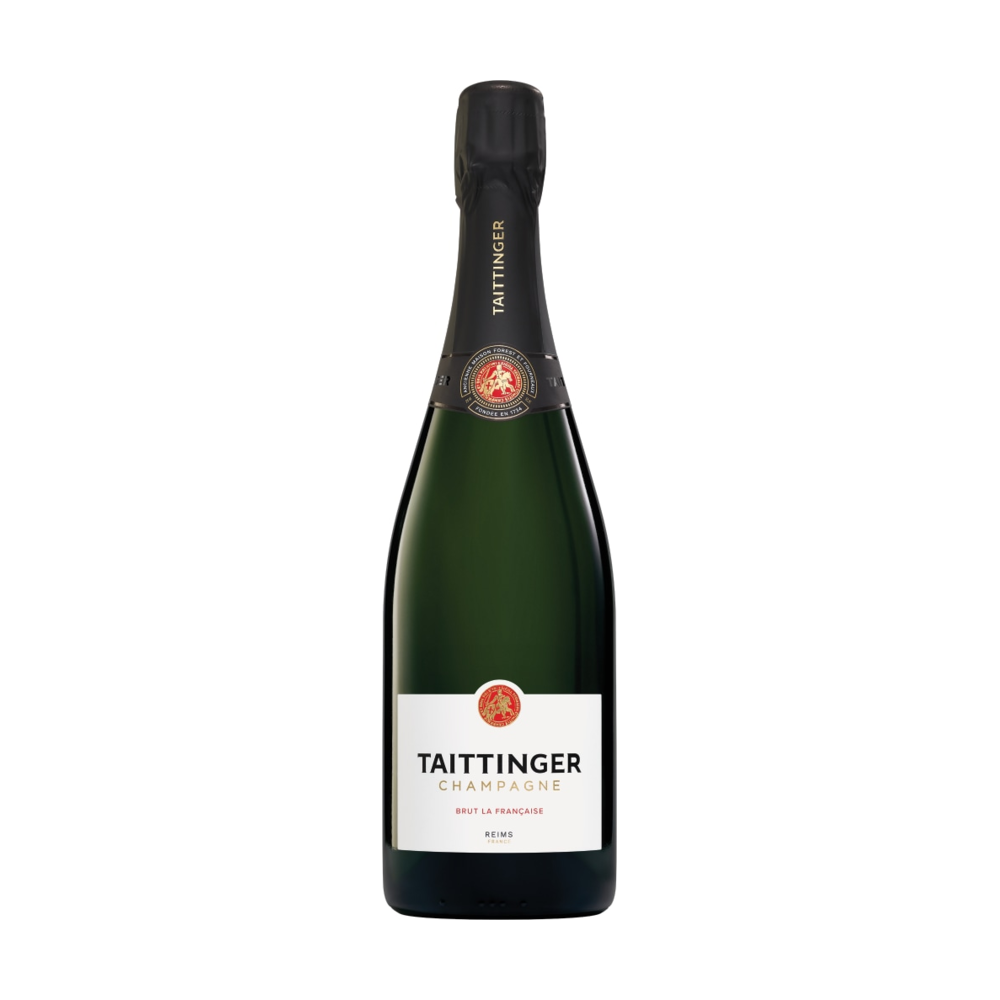
Our take
What we make of this bottle
The name Champagne points to a place before it points to anything in the glass: a French region whose boundaries were fixed in law in 1927, where only wine made inside that area, under its rules, may carry the name. Blending across grapes, plots and vintages is routine there, so the word does not tell us which grape or grapes went into this bottle, and we do not have that confirmed.
Taittinger says it is a family owned and independent house that the same family has run for four generations, which speaks to the company rather than to what is in this particular Champagne. Across five stores, in our September 2026 checks the price ranged from $69.99 to $82.99.
The name on this shelf, La Française, does not appear on Taittinger's own producer site. There, the non-vintage flagship carries a different name, Brut Réserve; it is the US importer, Kobrand Wine & Spirits, whose listing connects that wine to the La Française name sold here. We have not independently confirmed the two are the identical wine, so the blend and tasting details on the producer's Brut Réserve page stay unattached to this bottle for now. Kobrand's own listing separately attaches a 90-point score without naming the publication behind it.
What the producer's site does confirm at the house level: Vitalie Taittinger frames the family's current mission around what its English translation calls 'the art of enchantment,' four generations have run the house, and Chardonnay, the producer says, is the grape that anchors its style across the whole range.
Our call: worth it for the Taittinger name and the house's four generations of family ownership if that is what you are buying; the current head of the house frames its mission in the maker's own words, and Chardonnay anchors the style across the range. Pass if you want a confirmed blend or tasting note for this exact bottle; the producer's own site has no page called La Française, and we have not confirmed that it and the site's Brut Réserve are the same wine.
The Grocery Store Wine Desk · written Sep 16, 2026 from our research file for this wine. Numbers reflect our latest checks.
More from the desk.
Related bottles with a written overview and a public evidence file.
Perrier-Jouet
Read our take →Bollinger Champagne
Bollinger Cuvee Brut Champagne
Read our take →Drappier
Drappier Carte d'Or Brut Champagne
Read our take →Moet & Chandon
Moet & Chandon Brut Imperial Champagne France Sparkling Wine
Read our take →Louis Roederer
Champagne Louis Roederer Collection 246 Champagne French Wine
Read our take →Skurnik
Gaston Chiquet 'Tradition' Brut
Read our take →The prices we checked
Dated store checks, not a promise about your store.
- Kroger, Atlanta suburbs, GA$82.49
- Kroger, Cincinnati, OH$79.99
- Fred Meyer, Portland, OR$82.99
- King Soopers, Colorado Springs, CO$69.99
- Kroger, Richmond, VA$75.99
The regular price can vary by store and date.
From the producer
Family-owned Champagne house
Taittinger says on its own site that it is a family owned and independent Champagne house that has been run by the same family for four generations.
Research status
What we are still checking
Our overview above draws on the dated store feed, shopper ratings, our region and grape research, and any sourced producer facts. We are still working to confirm the current release, the full producer record, and the bottle itself, and we update this page as we learn more.
Getting to know Champagne.
Champagne is one appellation with many small vineyard plots and several distinct growing areas. Blending across grapes, places and years is common, so the producer and bottle still supply important detail.
What the name means
Champagne is a protected French appellation whose production area was set by law in 1927. The name applies to wine made within that defined area under its rules.
How grapes grow here
Oceanic and continental influences meet near the northern edge of reliable grape growing. Moderate rain and cool conditions help retain acidity, while frost and storms remain regular risks.
What lies under the vines
The subsoil is mainly limestone, including chalk, marl and harder limestone, with some sand and clay. Chalk can drain freely while holding water in its pores for dry periods.
How large the region is
- Vineyard area
- About 34,200 hectares are in production.
- Vineyard pattern
- About 280,000 small plots are worked by more than 16,000 growers.
Places within the region
- Four main areas
- Montagne de Reims, Marne Valley, Côte des Blancs and Côte des Bar are the four principal wine-growing areas.
- Villages
- The delimited vineyard includes 319 wine-growing villages across five departments.
Where this information comes from
- Store listing
- Price, package, product identifier. Checked Aug 10, 2026.
- Barcode
- The shelf barcode shown here is computed from the store product identifier. It has not been checked against a bottle.
- Method
- Every price, rating and fact here is a dated observation. How we check.