Our take
Raats Original Chenin Blanc
- Style
- White wine
- Size
- 750 ml
- Grape
- Chenin Blanc
- Region
- Stellenbosch
- Shelf barcode
- 0855200000011
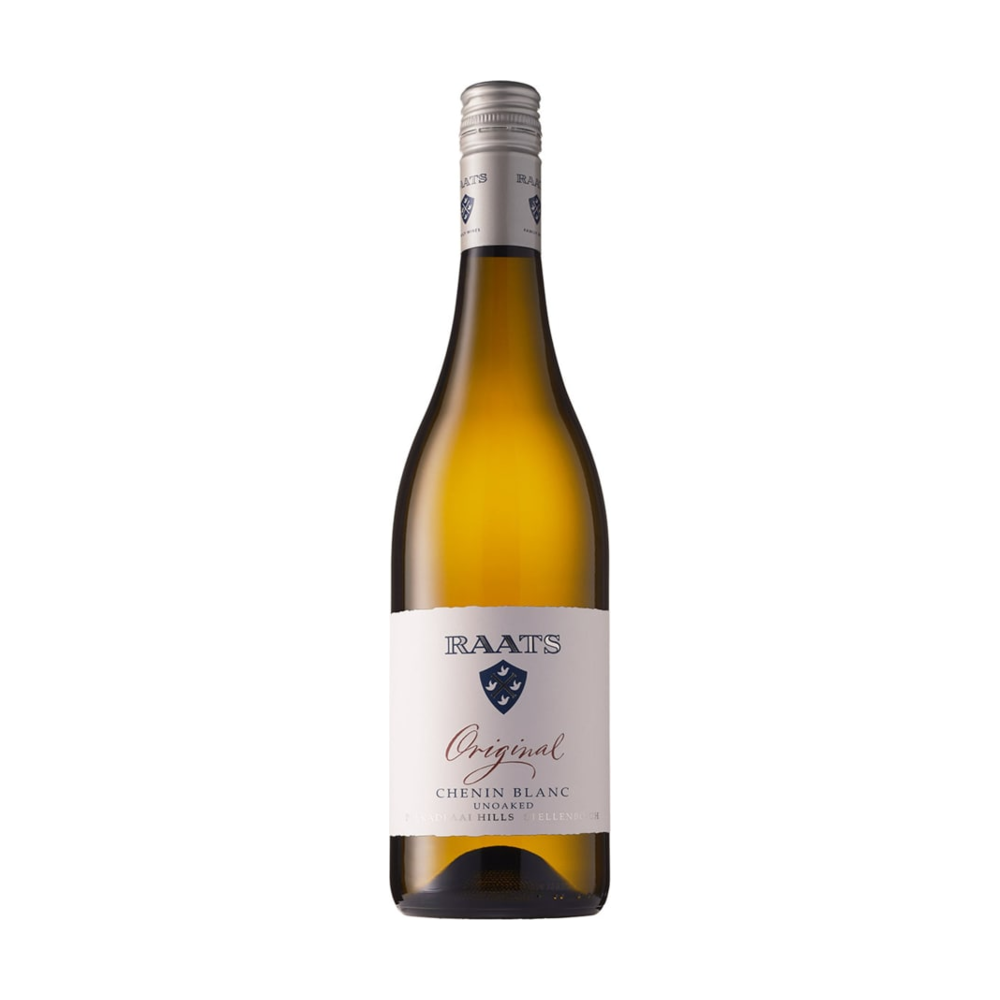
Our take
What we make of this bottle
The guides we follow place Stellenbosch between mountains and the Atlantic side of South Africa's Cape winelands. This bottle is a Chenin Blanc, and our grape research treats Chenin Blanc as a white variety with naturally high acidity, one that turns up as dry, sweet, still or sparkling wine, which is why the label and the origin carry so much weight with it.
Those same regional guides describe Stellenbosch as a registered district in South Africa's Wine of Origin system, within the wider Coastal Region, with warm dry summers, winter rainfall, and ocean air that cools the more exposed sites. They are careful to add that the district is broad, its slopes and valleys differing enough that a named ward or producer is needed for a close reading of place; in the stores we checked in September 2026, the wine ranged from $22.99 to $29.99.
We do not have a shopper rating for this wine. On flavor, an official category guide points to apple, quince, citrus and honeyed notes across Chenin Blanc's range, and notes that its high acidity can keep the wine firm and refreshing even when some sweetness stays, though how this particular bottle tastes is not something we can confirm.
Raats says the winery was founded by Bruwer Raats in 2000, in the Polkadraai area of Stellenbosch.
The producer's current product page lays out the process behind that label: fruit from two different soil types, decomposed granite and sandstone, is fermented separately, the granite contributing lime and mineral character and the sandstone bringing more tropical fruit and structure, before the wine is cold settled for two to three days, fermented cool in stainless steel tanks, and rested on its spent yeast for six months with no time in oak. Bruwer Raats explains the aim in the producer's own words: “What I was after was purity, freshness and lower alcohol levels,” crediting the decomposed dolomite soils of Polkadraai Hills, a district the Raats family helped establish as an official Stellenbosch ward in 2007. The page's tasting notes for the current release describe yellow apple, kiwi and pineapple with green melon and lime, a citrus-driven profile the winery credits to that split-soil, stainless-steel approach; the page reflects the current 2024 vintage, and tasting notes can shift a little from year to year even where the winemaking method stays the same.
Our call: worth reaching for if the producer's own account of place and process is what sells you, a single grape from a named Stellenbosch ward, split-soil fermentation explained in plain terms, and a stated no-oak style built for freshness. Pass if shopper feedback is what you weigh first; no rating has reached our record yet, so the producer's word is standing alone here.
The Grocery Store Wine Desk · written Sep 16, 2026 from our research file for this wine. Numbers reflect our latest checks.
More from the desk.
Related bottles with a written overview and a public evidence file.
Kanonkop
Read our take →Kanonkop
Kanonkop Kadette Pinotage
Read our take →Rue De Perle
Rue De Perle Vouvray Chenin Blanc White Wine
Read our take →Pine Ridge
Pine Ridge Chenin Blanc
Read our take →Decoy
Decoy Sauvignon Blanc
Read our take →Rombauer Vineyards
Rombauer Vineyards Sauvignon Blanc California White Wine
Read our take →The prices we checked
Dated store checks, not a promise about your store.
- Kroger, Atlanta suburbs, GA$29.99
- Kroger, Cincinnati, OH$22.99
The regular price can vary by store and date.
From the producer
Family founded 2000
Raats says founder Bruwer Raats started the winery in 2000 in the Polkadraai area of Stellenbosch, South Africa.
Research status
What we are still checking
Our overview above draws on the dated store feed, shopper ratings, our region and grape research, and any sourced producer facts. We are still working to confirm the current release, the full producer record, and the bottle itself, and we update this page as we learn more.
Getting to know Stellenbosch.
Stellenbosch lies between mountains and the Atlantic side of the Cape winelands. The district gives useful regional context, but its slopes, valleys and wards differ enough that a producer or ward is still needed for a close reading of place.
What the name means
Stellenbosch is a registered district in South Africa's Wine of Origin system and sits within the Coastal Region. Named wards inside the district provide a more specific origin when the label supplies one.
How grapes grow here
The district has warm, dry summers and winter rainfall, with ocean air helping cool exposed sites. Elevation and distance from False Bay change that influence across the district.
What lies under the vines
Weathered granite is important on mountain slopes, while shale-derived and alluvial soils occur elsewhere. The district contains many soil forms, so Stellenbosch alone does not identify one vineyard profile.
How large the region is
- Origin level
- Stellenbosch is a district, which is narrower than the Coastal Region and broader than its individual wards.
- Mapping limit
- Use this record only when the wine or an exact producer source establishes Stellenbosch origin.
Places within the region
- District and wards
- The Wine of Origin system places wards below districts. Polkadraai Hills is one named ward within Stellenbosch.
- Mountain and valley sites
- Elevations and soil depth vary from lower valley ground to mountain slopes, changing drainage and coastal exposure.
Getting to know Chenin Blanc.
Chenin Blanc is a white grape with naturally high acidity. It can make dry, sweet, still or sparkling wine, so the label and region matter greatly.
Category guide
What to expect in the glass
An official category guide describes apple, quince, citrus and honeyed notes across the style range. High acidity can give the wine a firm, refreshing line even when some sweetness remains.
Sources: New Zealand Winegrowers. Checked Aug 10, 2026.
Where this information comes from
- Store listing
- Price, package, product identifier. Checked Aug 10, 2026.
- Barcode
- The shelf barcode shown here is computed from the store product identifier. It has not been checked against a bottle.
- Method
- Every price, rating and fact here is a dated observation. How we check.