Our take
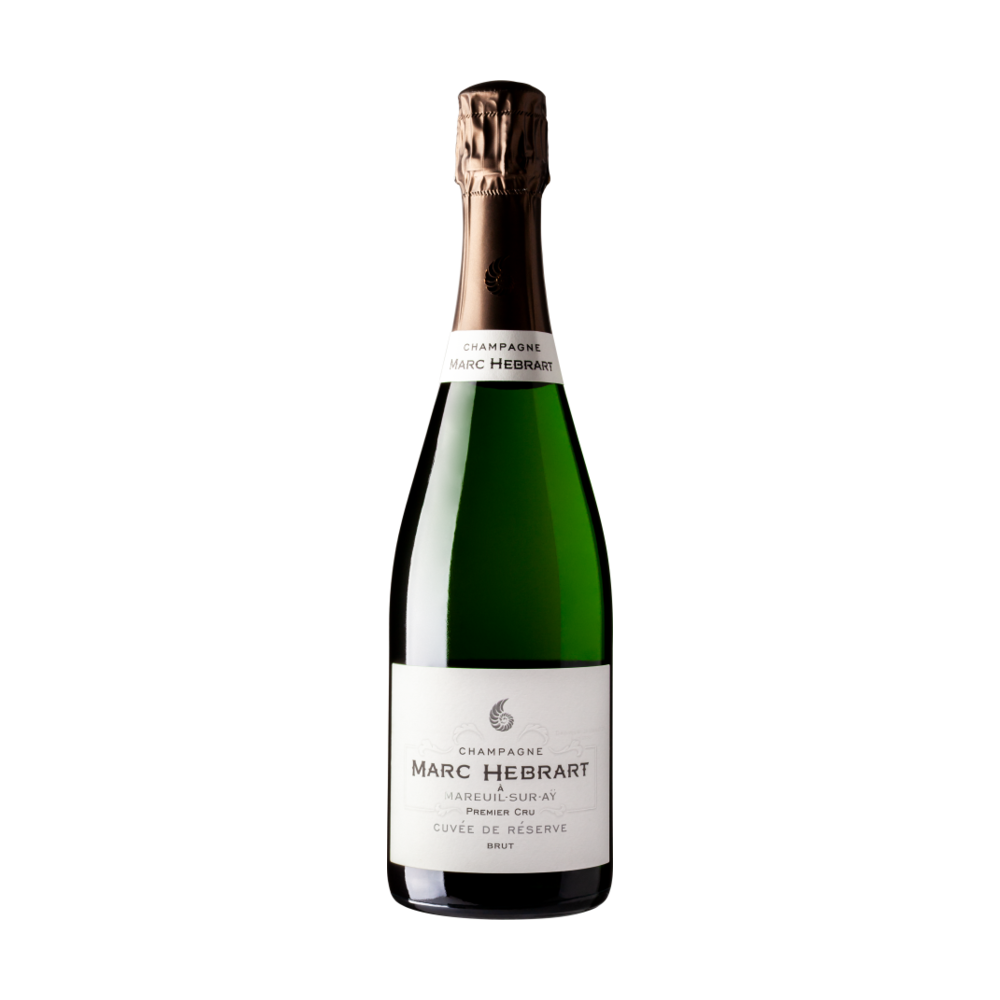
Champagne Marc Hebrart 'Cuvee de Reserve' 1er Cru Brut
- Style
- Sparkling wine
- Size
- 750 ml
- Region
- Champagne
- Shelf barcode
- 0747736178930
Our take
What we make of this bottle
Champagne, the first word of this wine's name, is first of all a place: the appellation's growing area was fixed by French law in 1927, and within it, across many small plots and several districts, blending grapes, vineyards and years together is common. The brand on the store listing is Skurnik, which traces itself to 1987 and now represents more than 800 producers of wine, spirits, sake and cider, though it is not established as the maker of this cuvee.
We do not have a shopper rating for this wine. The stores we checked in September 2026 had it from $68.99 to $72.99 across two stores.
Skurnik's own product and producer pages settle the maker question raised above: they identify Marc Hebrart, a grower estate in Mareuil-sur-Ay, as the source of this cuvee, and name the blend as 84 percent Pinot Noir and 16 percent Chardonnay, drawn from premier cru vineyards including Mareuil-sur-Ay, Avenay Val d'Or, Mutigny and Hautvillers, with 30 percent reserve wines from 2016 through 2021 blended into the two most recent harvests. The producer ages the wine 24 months on the spent yeast before disgorging, done in November 2024, and adds 7 grams of sugar per liter as dosage, a light finishing touch consistent with a Brut style. Jean-Paul Hebrart has run the family estate since 1997, when his father, who had bottled his own Champagne since 1964, stepped back; the estate now farms about 15 hectares organically and produces roughly 12,000 cases a year. Outside critics have reviewed the wine well: Wine Spectator gave it 92 points, calling it “a sleek, mouthwatering Champagne”, and Jeb Dunnuck scored it 90, describing “forward notes of perfume, lilac, red berries, river rock, and tangerine”.
Our call: buy it if a real grower behind the label matters to you; we can now confirm Marc Hebrart, a family estate that has bottled its own Champagne since 1964, made this cuvee, and Skurnik's technical detail, down to the disgorgement date and the exact premier cru vineyards, backs that up. Pass if a shopper rating matters more to you than critic scores or producer detail; none has reached our record yet, so the outside reviews from Wine Spectator and Jeb Dunnuck are carrying the case on their own.
The Grocery Store Wine Desk · written Sep 16, 2026 from our research file for this wine. Numbers reflect our latest checks.
More from the desk.
Related bottles with a written overview and a public evidence file.
Taittinger
Read our take →Perrier-Jouet
Perrier Jouet Grand Brut Champagne France Sparkling Wine
Read our take →Veuve Clicquot
Veuve Clicquot Brut Champagne France Sparkling Wine
Read our take →Moet & Chandon
Moet & Chandon Brut Imperial Champagne France Sparkling Wine
Read our take →Bollinger Champagne
Bollinger Cuvee Brut Champagne
Read our take →Piper-Heidsieck
Piper-Heidsieck Cuvée Brut Champagne Wine
Read our take →The prices we checked
Dated store checks, not a promise about your store.
- Kroger, Atlanta suburbs, GA$72.99
- Kroger, Cincinnati, OH$68.99
The regular price can vary by store and date.
From the producer
Importer history
Skurnik says it was founded in 1987 and today represents more than 800 producers of wine, spirits, sake and cider.
Research status
What we are still checking
Our overview above draws on the dated store feed, shopper ratings, our region and grape research, and any sourced producer facts. We are still working to confirm the current release, the full producer record, and the bottle itself, and we update this page as we learn more.
Getting to know Champagne.
Champagne is one appellation with many small vineyard plots and several distinct growing areas. Blending across grapes, places and years is common, so the producer and bottle still supply important detail.
What the name means
Champagne is a protected French appellation whose production area was set by law in 1927. The name applies to wine made within that defined area under its rules.
How grapes grow here
Oceanic and continental influences meet near the northern edge of reliable grape growing. Moderate rain and cool conditions help retain acidity, while frost and storms remain regular risks.
What lies under the vines
The subsoil is mainly limestone, including chalk, marl and harder limestone, with some sand and clay. Chalk can drain freely while holding water in its pores for dry periods.
How large the region is
- Vineyard area
- About 34,200 hectares are in production.
- Vineyard pattern
- About 280,000 small plots are worked by more than 16,000 growers.
Places within the region
- Four main areas
- Montagne de Reims, Marne Valley, Côte des Blancs and Côte des Bar are the four principal wine-growing areas.
- Villages
- The delimited vineyard includes 319 wine-growing villages across five departments.
Where this information comes from
- Store listing
- Price, package, product identifier. Checked Aug 10, 2026.
- Barcode
- The shelf barcode shown here is computed from the store product identifier. It has not been checked against a bottle.
- Method
- Every price, rating and fact here is a dated observation. How we check.