Our take
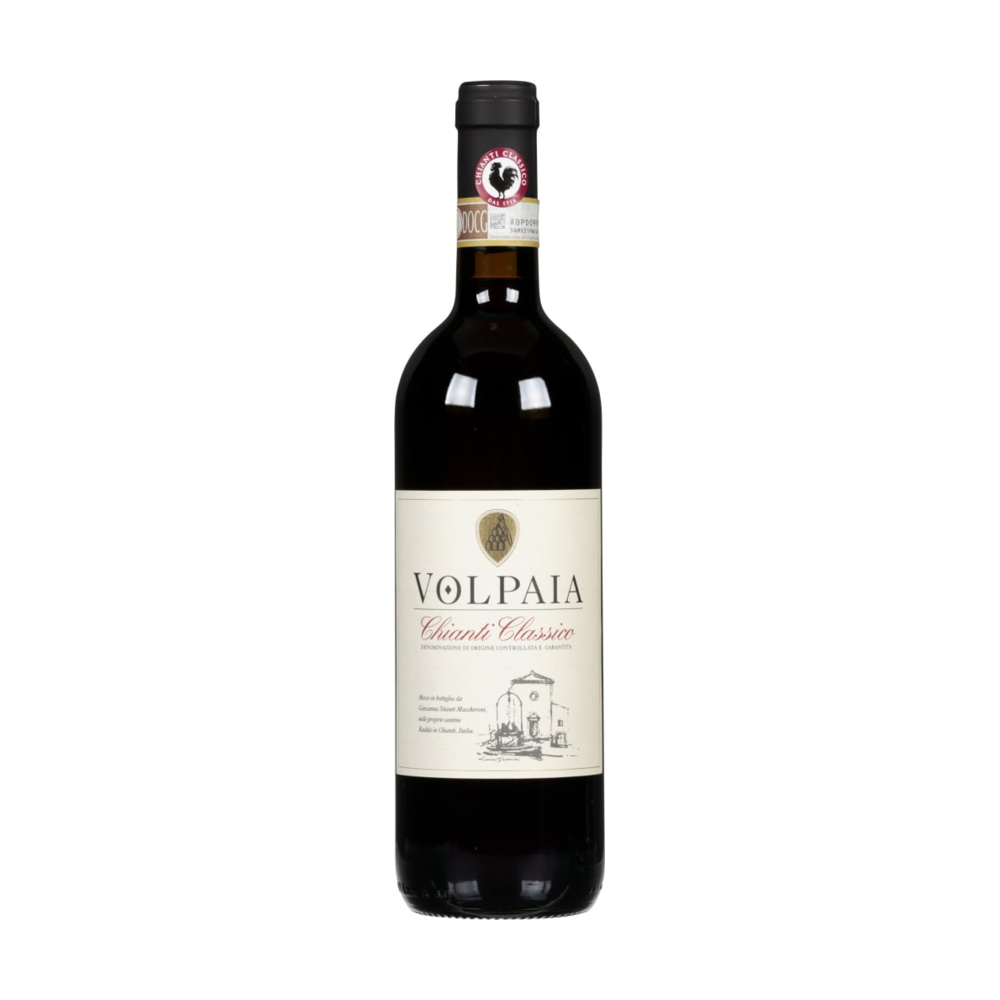
Castello di Volpaia Chianti Classico Sangiovese Tuscany Italy Organic Red Wine
- Style
- Red wine
- Size
- 750 ml
- Grape
- Sangiovese
- Region
- Chianti and Chianti Classico
- Shelf barcode
- 0720815570139
Our take
What we make of this bottle
Our September 2026 checks put this one from $34.99 to $59.99. Behind those prices is Sangiovese, a red grape closely associated with central Italy and the main grape in Chianti.
An official category guide puts cherry at the front, alongside herbs, clear acidity and a firm grip of tannin, and is clear that vineyard yield, oak, blending and climate can pull the style from light and direct toward something denser. So the same grape covers a lot of ground depending on how it is grown and made.
The label reads Chianti Classico, and that second word matters. Chianti and Chianti Classico are separate protected Tuscan designations; the Classico zone sits in higher inland country between Florence and Siena, and a bottle marked Chianti Classico is not just a wordier Chianti. Castello di Volpaia says its hilltop site in Radda in Chianti was first documented in 1172, and the Mascheroni Stianti family, who own it now, farm the vines organically.
We do not have a shopper rating for this wine.
The producer's own shop page for this Chianti Classico states the blend precisely: 90 percent Sangiovese and 10 percent Merlot, aged 12 months in large oak casks, and certified organic. That is a different wine from the estate's Reserve-tier Chianti Classico, bottled under the name Castello di Volpaia and made from 100 percent Sangiovese; this listing is the entry blend. The estate describes its vineyards as sitting above 400 meters on sandstone soils in what it calls the Alto Chianti, and outside critics have scored the wine between 90 and 96 points, Luca Gardini's 96 the highest on record.
Our call: worth reaching for if an organically farmed Chianti Classico with a stated blend and a vineyard first documented in 1172 is the kind of story that earns your money; outside critics have backed that story with scores from 90 to 96 points. Pass if you want a shopper's rating to lean on too: none has reached our record yet, so the case here rests on the estate's own account and outside critics, not on other buyers.
The Grocery Store Wine Desk · written Sep 16, 2026 from our research file for this wine. Numbers reflect our latest checks.
More from the desk.
Related bottles with a written overview and a public evidence file.
Ruffino
Read our take →Dellatorri
Dellatorri Chianti Riserve Italian Red Wine
Read our take →DaVinci Wine
Da Vinci Chianti Italian Red Wine
Read our take →Frescobaldi
Frescobaldi Nipozzano Chianti Rufina Riserva Italy Red Wine
Read our take →Cavaliere d'Oro
Cavaliere d'Oro Gabbiano Chianti Red Wine
Read our take →Ruffino
Ruffino Riserva Ducale Chianti Classico DOCG Italian Red Blend Wine
Read our take →The prices we checked
Dated store checks, not a promise about your store.
- Kroger, Atlanta suburbs, GA$59.99
- Kroger, Cincinnati, OH$34.99
The regular price can vary by store and date.
From the producer
Chianti Classico estate
Castello di Volpaia says its hilltop site in Radda in Chianti was first documented in 1172, and the estate is now owned by the Mascheroni Stianti family, who farm the vineyards organically.
Research status
What we are still checking
Our overview above draws on the dated store feed, shopper ratings, our region and grape research, and any sourced producer facts. We are still working to confirm the current release, the full producer record, and the bottle itself, and we update this page as we learn more.
Getting to know Chianti and Chianti Classico.
Both names point to Sangiovese-led Tuscan wine, but they have different boundaries and production rules. Reading the full label is the first step because the two names should not be collapsed into one legal category.
What the name means
Chianti DOCG and Chianti Classico DOCG are separate protected Tuscan designations. A bottle labeled Chianti Classico is not simply a smaller wording variant of Chianti.
How grapes grow here
The broad Chianti zone crosses central Tuscan hills, while Chianti Classico occupies higher inland country between Florence and Siena. Elevation, slope and exposure create local differences within both designations.
What lies under the vines
Clay and limestone are common, with sandstone, marl and stony ground varying by district. Neither designation reduces the whole area to one soil.
How large the region is
- Chianti DOCG vineyard base
- The Chianti consortium reports about 15,500 hectares of vineyard and about 3,000 producers.
- Label check
- Keep the complete designation when mapping a wine so Chianti and Chianti Classico remain distinct.
Places within the region
- Chianti DOCG
- The larger designation extends across six Tuscan provinces and includes named zones such as Rufina and Colli Senesi.
- Chianti Classico DOCG
- The historic production zone lies between Florence and Siena and has its own consortium and rules.
Getting to know Sangiovese.
Sangiovese is a red grape closely associated with central Italy and is the main grape in Chianti wines. It is also grown elsewhere as a varietal wine or blending grape.
Category guide
What to expect in the glass
An official category guide describes cherry-led fruit, herbs, clear acidity and firm tannin. Climate, yield, blending and oak can move the result from light and direct to more concentrated.
Sources: New Zealand Winegrowers. Checked Aug 10, 2026. See all 8 Sangiovese wines we cover →
Where this information comes from
- Store listing
- Price, package, product identifier. Checked Aug 10, 2026.
- Barcode
- The shelf barcode shown here is computed from the store product identifier. It has not been checked against a bottle.
- Method
- Every price, rating and fact here is a dated observation. How we check.