Our take
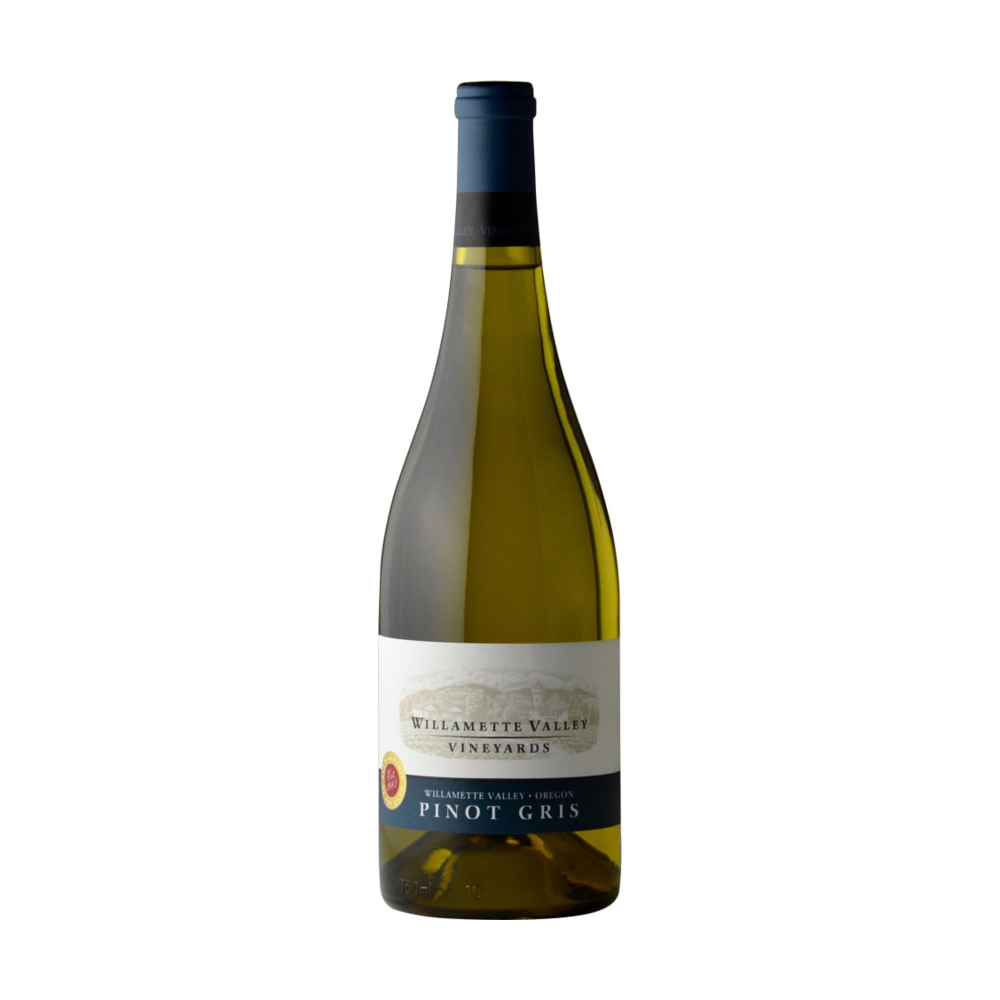
Willamette Valley Vineyards Pinot Gris
- Style
- White wine
- Size
- 750 ml
- Grape
- Pinot Gris
- Region
- Willamette Valley
- Shelf barcode
- 0717071919703
Our take
What we make of this bottle
Pinot Gris and Pinot Grigio are the French and Italian names for the same grape, and grape guides say the French Gris name often points to a rounder, more textured style than the crisper, lighter Grigio bottlings. This label reads Pinot Gris, and names Willamette Valley, Oregon plainly. Regional guides describe that valley as a cool, roughly hundred-mile-long growing corridor set between the Coast Range and the Cascade foothills, an American Viticultural Area since 1983 that now holds eleven smaller nested regions. What the label does not narrow down is which of those smaller regions, or which vineyard, grew this particular fruit.
Willamette Valley Vineyards' own history page traces the grape on this label to a specific source: founder Jim Bernau says he got his first Pinot Gris cuttings through the pioneering work of David Lett at The Eyrie Vineyards, the winemaker credited with first bringing the grape to Oregon from France. The winery's page adds that Pinot Gris has since become Oregon's leading white wine.
The producer's own technical sheet for the 2024 vintage, matched to this current release, lists a harvest between September 27 and October 12, 2024, with grapes picked at 22.8 Brix and pressed as whole clusters. The finished wine comes in at 13.3 percent alcohol, fermented roughly five weeks in stainless steel tanks at 55 to 60 degrees, no oak used, then given time on the spent yeast before bottling. The winery's own tasting notes describe a pale lemon color with aromas of citrus zest, honeydew and apple, and a dry palate of pear, honeysuckle and lemongrass, finishing soft with a lingering acidity.
We do not have a shopper rating for this wine. In our September 2026 checks the bottle ranged from $18.99 to $29.99 across four stores.
Our call: a solid choice if a fully documented Oregon Pinot Gris, with a vintage matched harvest date, alcohol level and a traceable grape lineage back to Oregon's first plantings, is enough to go on. Pass if you want the crowd's confirmation or a single named vineyard behind the wine; no shopper rating has reached our record yet, and the origin here stays at the valley level rather than one estate or block.
The Grocery Store Wine Desk · written Sep 16, 2026 from our research file for this wine. Numbers reflect our latest checks.
More from the desk.
Related bottles with a written overview and a public evidence file.
Pike Road
Read our take →King Estate
King Estate Willamette Valley Pinot Gris
Read our take →Willamette Valley Vineyards
Willamette Valley Vineyards Whole Cluster Pinot Noir Oregon Red Wine
Read our take →La Crema
La Crema Willamette Valley Pinot Noir Oregon Red Wine
Read our take →Castle Rock Winery
Castle Rock Willamette Valley Pinot Noir
Read our take →Stoller Family Estate
Stoller Family Estate Willamette Valley Pinot Noir Oregon Red Wine
Read our take →The prices we checked
Dated store checks, not a promise about your store.
- Kroger, Cincinnati, OH$21.99
- Fred Meyer, Portland, OR$24.99
- King Soopers, Colorado Springs, CO$18.99
- QFC, Tacoma, WA$29.99
The regular price can vary by store and date.
From the producer
Founder and community ownership
Willamette Valley Vineyards says it was founded in 1983 by Oregon native Jim Bernau at its estate in Turner, Oregon, and says people can become owners through its preferred stock offering.
Research status
What we are still checking
Our overview above draws on the dated store feed, shopper ratings, our region and grape research, and any sourced producer facts. We are still working to confirm the current release, the full producer record, and the bottle itself, and we update this page as we learn more.
Getting to know Willamette Valley.
The Willamette Valley runs for more than 100 miles and contains many hillside settings. The AVA establishes origin, but a nested AVA or vineyard gives a closer reading of soil, elevation and wind.
What the name means
Willamette Valley has been a federally recognized American Viticultural Area since 1983. Eleven smaller AVAs now sit within the larger valley boundary.
How grapes grow here
The Coast Range limits direct Pacific influence and the Cascades separate the valley from drier central Oregon. The region has a cool growing climate, but hills, gaps and distance north or south create local differences.
What lies under the vines
Marine sedimentary, volcanic basalt and windblown loess are the three major hillside soil groups identified by the regional association. Valley-floor alluvium adds another setting within the broad AVA.
How large the region is
- Total AVA area
- The Willamette Valley AVA covers about 3,438,000 acres.
- Planted vineyard area
- The regional association reports 33,634 planted vineyard acres in its current facts and figures.
Places within the region
- Northern nested AVAs
- Dundee Hills, Eola-Amity Hills, Ribbon Ridge, Yamhill-Carlton and several newer AVAs identify smaller parts of the valley.
- Regional range
- The main AVA runs from the Portland area south to Eugene, so the valley name does not describe one hillside or mesoclimate.
Getting to know Pinot Gris.
Pinot Gris and Pinot Grigio are two names for the same white grape. The label wording often signals a style choice, but it does not create a different grape.
Category guide
What to expect in the glass
Pinot Grigio is often used for a lighter, crisper style, while Pinot Gris can point to more body and texture. Official guides describe pear, apple, citrus and stone fruit, with sweetness ranging from dry to gently off-dry.
Sources: New Zealand Winegrowers; New Zealand Winegrowers. Checked Aug 10, 2026. See all 48 Pinot Gris and Pinot Grigio wines we cover →
Where this information comes from
- Store listing
- Price, package, product identifier. Checked Aug 14, 2026.
- Barcode
- The shelf barcode shown here is computed from the store product identifier. It has not been checked against a bottle.
- Method
- Every price, rating and fact here is a dated observation. How we check.