Our take
Yellow Tail Buttery Chardonnay Australia White Wine
- Style
- White wine
- Size
- 750 ml
- Grape
- Chardonnay
- Region
- Australia
- Shelf barcode
- 0839743003203
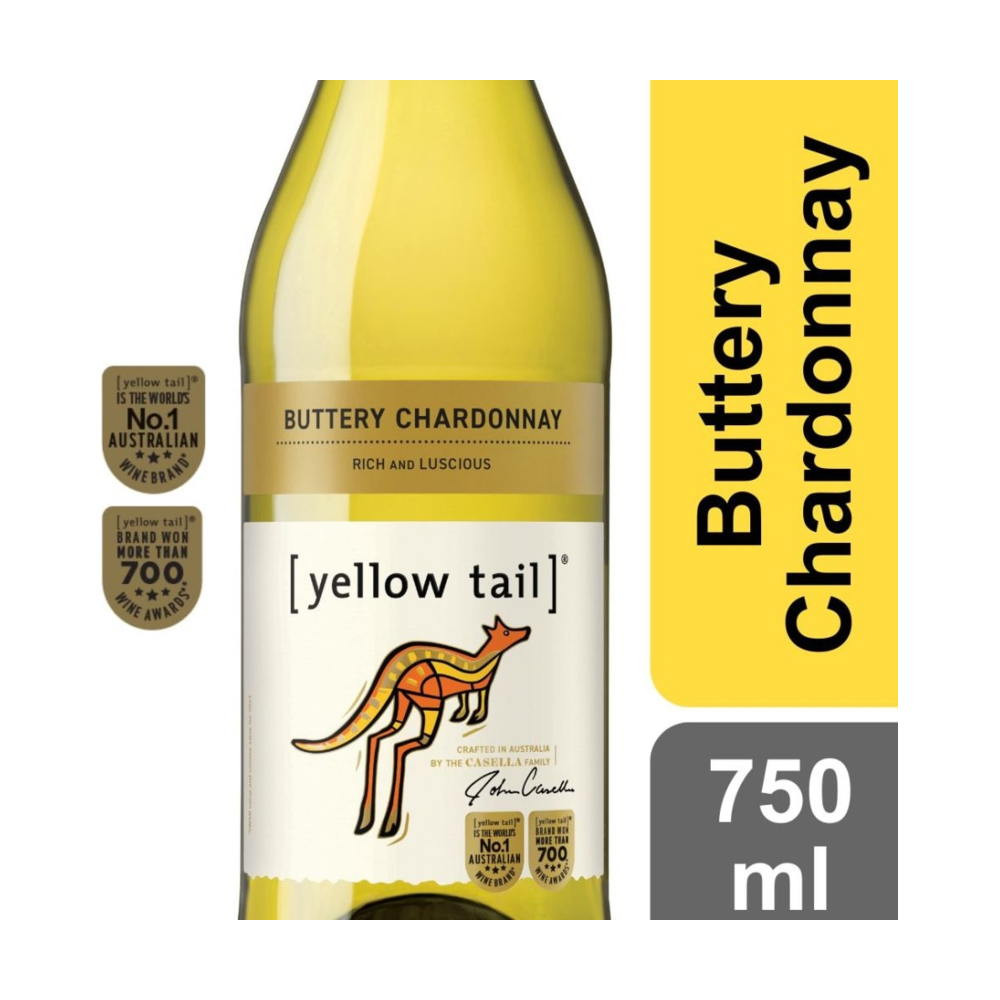
Our take
What we make of this bottle
The name says "Buttery," but nothing on record confirms the wine tastes that way; take it as the style the name points to, not a flavor we can vouch for. What the origin does fix is the country. Australia is a protected wine geographical indication, and its official register also holds narrower state, zone, region and subregion names. A country label like this one pins the nation but not the vineyard, so a named region would have to come first before any local climate or soil detail could attach.
This is a Chardonnay, a white grape that official category guides say can be made without oak for a lighter shape or aged in oak to gain more weight. Casella Family Brands says Yellow Tail launched in 2001, and that the family company is based in Yenda, New South Wales. In our September 2026 checks it was $10.49, which puts it among the least expensive whites we track, and we do not have a shopper rating for this bottle. Australian wine regions run from cool maritime and high-elevation sites to warm inland districts, which is why the country name by itself cannot describe one growing season or temperature pattern.
The producer's own product page for this exact bottle backs the name up: it describes “[yellow tail] Buttery Chardonnay” as “full of flavor with a rich and buttery finish”, with an aroma the page calls “rich buttery aromas complimented with notes of vanilla and butterscotch” and a flavor it calls “rich and buttery, with hints of smooth vanilla and toasted oak”. The page lists 13.0 percent alcohol and suggests pairing the wine with a creamy pasta or a cheese platter. The brand's FAQ page adds nutrition detail not on the product page itself: 107 calories and 0.80 grams of sugar per 100 milliliters, and the FAQ marks this particular bottle as not vegan-friendly, a distinction the same page draws for only some of the brand's wines.
Our call: it suits a shopper who wants the richer, oak-touched Chardonnay style the name promises, priced among the least expensive whites we track, with the producer's own page spelling out the alcohol level and nutrition detail down to the calorie and sugar count. Pass if a vegan label matters to your shopping; the brand's own FAQ marks this bottle as not vegan-friendly, and no shopper rating has reached our record to confirm the style beyond the producer's word.
The Grocery Store Wine Desk · written Sep 16, 2026 from our research file for this wine. Numbers reflect our latest checks.
More from the desk.
Related bottles with a written overview and a public evidence file.
Yellow Tail
Read our take →Yellow Tail
Yellow Tail Pure Bright Pinot Grigio Australia White Wine
Read our take →Yellow Tail
Yellow Tail Pure Bright Only 80 Calories Sauvignon Blanc Australia White Wine
Read our take →Yellow Tail
Yellow Tail Pinot Grigio Australia White Wine
Read our take →Sideshow Wines
Sideshow The Ring Master Aussie Dark Red Wine
Read our take →Yellow Tail
Yellow Tail Shiraz Australia Red Wine
Read our take →The price we checked
Dated store checks, not a promise about your store.
- Kroger, Atlanta suburbs, GA$10.49
The regular price can vary by store and date.
From the producer
Brand history
Casella Family Brands says Yellow Tail launched in 2001. The family company is based in Yenda, New South Wales.
Research status
What we are still checking
Our overview above draws on the dated store feed, shopper ratings, our region and grape research, and any sourced producer facts. We are still working to confirm the current release, the full producer record, and the bottle itself, and we update this page as we learn more.
Getting to know Australia.
An Australian label establishes country origin but covers many different vineyard settings. The named region, when present, is needed before attaching local climate or soil detail.
What the name means
Australia is a protected national wine geographical indication. The official register also contains narrower state, zone, region and subregion names.
How grapes grow here
Australian wine regions range from cool maritime and high-elevation sites to warm inland districts. The country name cannot describe one growing season or temperature pattern.
What lies under the vines
Ancient weathered ground, limestone, sand, clay, gravel and alluvial soils occur across the registered regions. No single soil profile follows from an Australia-only label.
How large the region is
- Wine regions
- Wine Australia reports about 65 wine-growing regions.
- Growers
- The national sector includes about 6,000 grape growers.
Places within the region
- Registered places
- The Wine Australia register separates the national GI from states, zones, regions and subregions.
- What to check next
- Look for a place such as Barossa Valley, Margaret River, Riverland or Tasmania before adding regional detail.
Getting to know Chardonnay.
Chardonnay is a white grape used for still and sparkling wine. It can be made without oak for a lighter shape or fermented and aged in oak for more weight.
Category guide
What to expect in the glass
Official category guides place citrus and apple at the cooler end and stone fruit or tropical fruit in riper examples. Oak and time on the spent yeast can add toast, spice and a rounder texture, but those features are winemaking choices rather than a guarantee.
Sources: New Zealand Winegrowers; Napa Valley Vintners. Checked Aug 10, 2026. See all 116 Chardonnay wines we cover →
Where this information comes from
- Store listing
- Price, package, product identifier. Checked Aug 10, 2026.
- Barcode
- The shelf barcode shown here is computed from the store product identifier. It has not been checked against a bottle.
- Method
- Every price, rating and fact here is a dated observation. How we check.