Our take
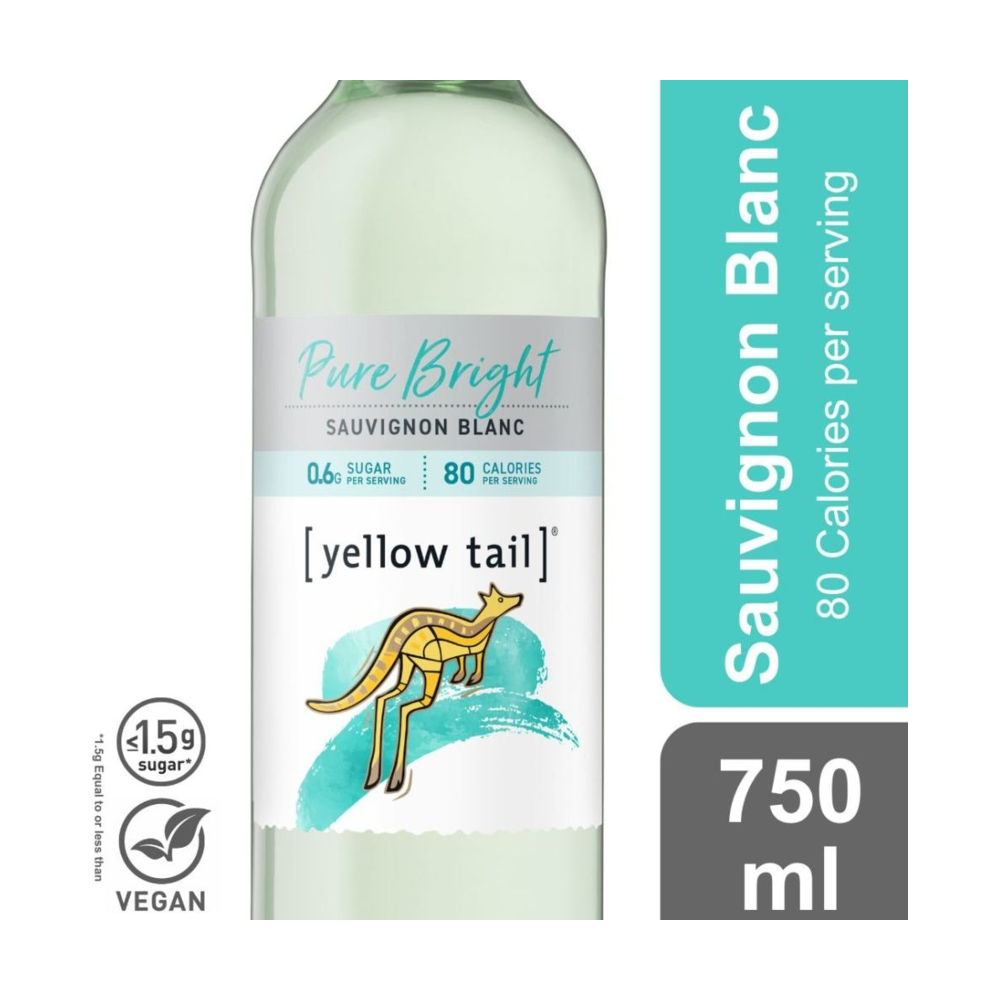
Yellow Tail Pure Bright Only 80 Calories Sauvignon Blanc Australia White Wine
- Style
- White wine
- Size
- 750 ml
- Grape
- Sauvignon Blanc
- Region
- Australia
- Shelf barcode
- 0839743002909
Our take
What we make of this bottle
The calorie figure is in the name, Only 80, and the name is the only place we have seen that figure. Casella Family Brands, the family company based in Yenda, New South Wales, says it launched Yellow Tail in 2001. The listing names Australia, the whole country: a protected geographical indication under Australian wine rules, one that runs from cool maritime and high-elevation sites to warm inland districts, so the label settles the origin but not the climate. The grape is Sauvignon Blanc, and we confirmed it; official regional guides describe the category with citrus, green herbs, gooseberry and tropical fruit, greener from cooler sites and more tropical from riper ones.
The shopper rating on the store listing stands at 4.35, trailing the 4.71 median for the wines we rate, and it comes from 234 shoppers; not many of the wines we cover have been rated by more people. Few whites in our catalog cost less, either. In our checks of August 12, 2026, five stores posted prices from $8.99 to $14.99.
Casella Family Brands publishes matching specs for this wine under two market names: Pure Bright in the US and Light & Bright in Australia, both selling what the producer describes as the same wine. The producer's nutrition panel lists 80 calories, 0.6 grams of carbohydrates, and no protein or fat in a 5-ounce serving, at 8.5 percent alcohol, which the producer states is 25 percent less than its standard Sauvignon Blanc. The producer describes the aroma as light citrus with gooseberry, lime and a hint of passionfruit, and the flavor, in the producer's words, as "refreshing and vibrant, bursting with zingy passionfruit and grapefruit flavours," meant to pair with seafood.
Our call: buy it if the calorie line in the product name is what brought you to this shelf; the producer's own nutrition panel backs that up, with 8.5 percent alcohol and 25 percent less alcohol than its standard Sauvignon Blanc, and it is priced among the least expensive whites we track, carrying one of the larger rating pools in our coverage. Pass if the score is your filter rather than the calories; the average sits below the middle of the rated wines we cover.
The Grocery Store Wine Desk · written Aug 17, 2026 from our research file for this wine. Numbers reflect our latest checks.
More from the desk.
Related bottles with a written overview and a public evidence file.
Yellow Tail
Read our take →Yellow Tail
Yellow Tail Pinot Grigio Australia White Wine
Read our take →Yellow Tail
Yellow Tail Chardonnay Australia White Wine
Read our take →Yellow Tail
Yellow Tail Buttery Chardonnay Australia White Wine
Read our take →19 Crimes Wine
19 Crimes The Uprising Red Wine Blend
Read our take →19 Crimes Wine
19 Crimes Red Wine Blend
Read our take →The prices we checked
Dated store checks, not a promise about your store.
- Kroger, Atlanta suburbs, GA$14.99
- Kroger, Cincinnati, OH$8.99
- Ralphs, Long Beach, CA$8.99
- Kroger, Knoxville, TN$8.99
- Kroger, Richmond, VA$11.99
The regular price can vary by store and date.
From the producer
Brand history
Casella Family Brands says Yellow Tail launched in 2001. The family company is based in Yenda, New South Wales.
Research status
What we are still checking
Our overview above draws on the dated store feed, shopper ratings, our region and grape research, and any sourced producer facts. We are still working to confirm the current release, the full producer record, and the bottle itself, and we update this page as we learn more.
Getting to know Australia.
An Australian label establishes country origin but covers many different vineyard settings. The named region, when present, is needed before attaching local climate or soil detail.
What the name means
Australia is a protected national wine geographical indication. The official register also contains narrower state, zone, region and subregion names.
How grapes grow here
Australian wine regions range from cool maritime and high-elevation sites to warm inland districts. The country name cannot describe one growing season or temperature pattern.
What lies under the vines
Ancient weathered ground, limestone, sand, clay, gravel and alluvial soils occur across the registered regions. No single soil profile follows from an Australia-only label.
How large the region is
- Wine regions
- Wine Australia reports about 65 wine-growing regions.
- Growers
- The national sector includes about 6,000 grape growers.
Places within the region
- Registered places
- The Wine Australia register separates the national GI from states, zones, regions and subregions.
- What to check next
- Look for a place such as Barossa Valley, Margaret River, Riverland or Tasmania before adding regional detail.
Getting to know Sauvignon Blanc.
Sauvignon Blanc is a white grape known for wines with clear aroma and refreshing acidity. It is usually made as a dry still wine, though sweetness and oak use vary.
Category guide
What to expect in the glass
Official regional guides describe citrus, green herbs, gooseberry and tropical fruit across the category. Cooler sites can emphasize green and citrus notes, while warmer or riper fruit can lean more tropical.
Sources: New Zealand Winegrowers; Napa Valley Vintners. Checked Aug 10, 2026. See all 83 Sauvignon Blanc wines we cover →
Where this information comes from
- Store listing
- Price, package, product identifier, and shopper rating. Checked Aug 10, 2026.
- Barcode
- The shelf barcode shown here is computed from the store product identifier. It has not been checked against a bottle.
- Method
- Every price, rating and fact here is a dated observation. How we check.