Our take
Yellow Tail Cabernet Sauvignon Australia Red Wine
- Style
- Red wine
- Size
- 750 ml
- Grape
- Cabernet Sauvignon
- Region
- Australia
- Shelf barcode
- 0031259009452
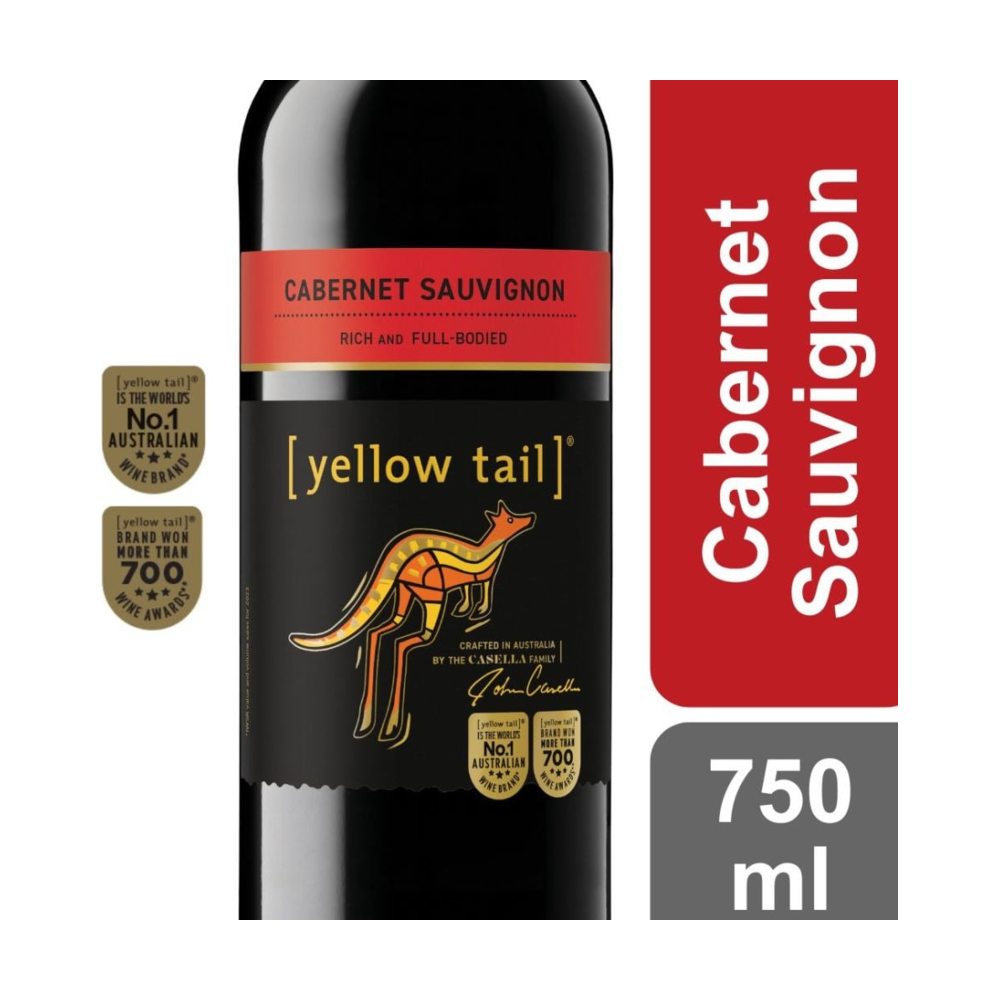
Our take
What we make of this bottle
Australia on this label names a country, not a corner of one. Australian vineyards run from cool coastal sites to warm inland districts, so the country name alone cannot stand for a single climate or one stretch of ground. What we can pin down is the house behind it: Casella Family Brands says Yellow Tail launched in 2001, and the family company is based in Yenda, in New South Wales. The grape in the bottle is Cabernet Sauvignon. The lowest observed price was $7.99 and the highest $11.99, across seven stores in our September 2026 checks, which puts it near the bottom of the reds we track for price.
The price is low, and the rating is low too. So far the number of shopper ratings is 2, putting it at 3 out of five, which sits well below the 4.71 median for those same reds and near the bottom of their scores. It is at once one of the cheaper reds here and one of the lower rated. Which matters more to you tonight, the low price or a higher score?
The producer's own product page fills in what the label leaves out: this Cabernet Sauvignon carries 13.5 percent alcohol, an aroma the page describes as “A fragrant aroma of red fruits and blackcurrants fills the nose, along with blackberries and sweet mocha”, and a flavor it calls “classic and velvety, with notes of juicy blackcurrants, sweet mocha and spice”, suggested alongside a Sunday roast. The brand's FAQ page adds that a 100-milliliter serving carries 119 calories and 1.10 grams of sugar, and marks this bottle vegan-friendly. The brand's own history page carries an unresolved conflict of its own: the opening text says the Casella family founded their winery in 1969, while the same page's timeline says the family arrived in Australia and began making wine in 1957.
Our call: it suits a shopper who wants a name-brand Cabernet priced near the bottom of the reds we track, with the producer's own page naming an exact alcohol level and a full nutrition count behind the label. Pass if the rating is your compass; the two shoppers on our record land near the bottom of their scores too, and two ratings are still a start rather than a settled reputation.
The Grocery Store Wine Desk · written Sep 16, 2026 from our research file for this wine. Numbers reflect our latest checks.
More from the desk.
Related bottles with a written overview and a public evidence file.
Yellow Tail
Read our take →19 Crimes Wine
19 Crimes The Uprising Red Wine Blend
Read our take →Sideshow Wines
Sideshow Shiraz Cabernet Sauvignon
Read our take →Sideshow Wines
Sideshow The Ring Master Aussie Dark Red Wine
Read our take →19 Crimes Wine
19 Crimes Red Wine Blend
Read our take →Two Hands
Two Hands Gnarly Dudes Shiraz Australian Red Wine
Read our take →The prices we checked
Dated store checks, not a promise about your store.
- Kroger, Atlanta suburbs, GA$10.49
- Ralphs, Long Beach, CA$8.99
- Fred Meyer, Portland, OR$11.99
- Smith's, Las Vegas, NV$8.99
- Kroger, Richmond, VA$11.99
- Fry's, Tucson, AZ$7.99
- QFC, Tacoma, WA$8.99
The regular price can vary by store and date.
From the producer
Brand history
Casella Family Brands says Yellow Tail launched in 2001. The family company is based in Yenda, New South Wales.
Research status
What we are still checking
Our overview above draws on the dated store feed, shopper ratings, our region and grape research, and any sourced producer facts. We are still working to confirm the current release, the full producer record, and the bottle itself, and we update this page as we learn more.
Getting to know Australia.
An Australian label establishes country origin but covers many different vineyard settings. The named region, when present, is needed before attaching local climate or soil detail.
What the name means
Australia is a protected national wine geographical indication. The official register also contains narrower state, zone, region and subregion names.
How grapes grow here
Australian wine regions range from cool maritime and high-elevation sites to warm inland districts. The country name cannot describe one growing season or temperature pattern.
What lies under the vines
Ancient weathered ground, limestone, sand, clay, gravel and alluvial soils occur across the registered regions. No single soil profile follows from an Australia-only label.
How large the region is
- Wine regions
- Wine Australia reports about 65 wine-growing regions.
- Growers
- The national sector includes about 6,000 grape growers.
Places within the region
- Registered places
- The Wine Australia register separates the national GI from states, zones, regions and subregions.
- What to check next
- Look for a place such as Barossa Valley, Margaret River, Riverland or Tasmania before adding regional detail.
Getting to know Cabernet Sauvignon.
Cabernet Sauvignon is a red grape grown in many wine regions. It often makes firmly built wines and is also a common part of red blends.
Category guide
What to expect in the glass
Regional authorities describe black currant, cherry and plum as common fruit references, with noticeable tannin and possible spice from oak. Ripeness, climate and winemaking can move the wine from lean and herbal to broad and fruit-led.
Sources: Napa Valley Vintners. Checked Aug 10, 2026. See all 163 Cabernet Sauvignon wines we cover →
Where this information comes from
- Store listing
- Price, package, product identifier, and shopper rating. Checked Aug 10, 2026.
- Barcode
- The shelf barcode shown here is computed from the store product identifier. It has not been checked against a bottle.
- Method
- Every price, rating and fact here is a dated observation. How we check.