Our take
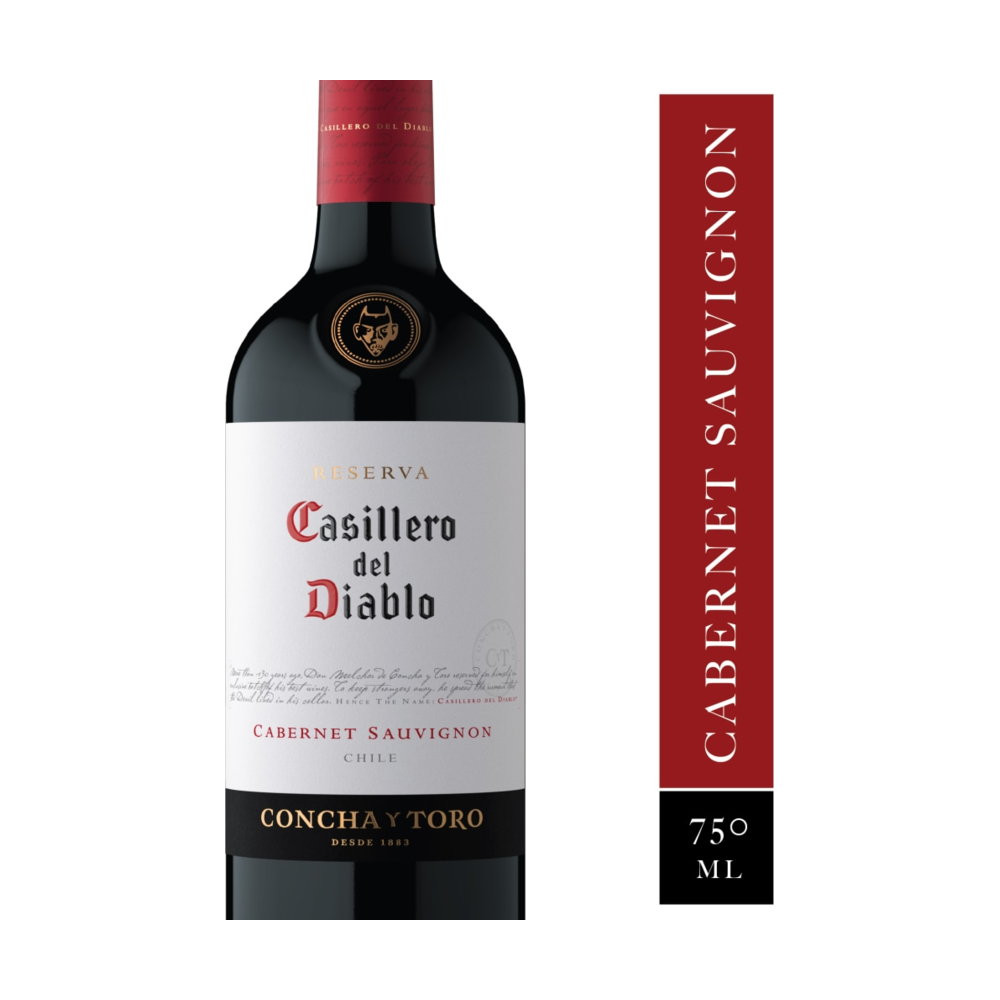
Casillero del Diablo Cabernet Sauvignon Chile Red Wine
- Style
- Red wine
- Size
- 750 ml
- Grape
- Cabernet Sauvignon
- Region
- Chile
- Shelf barcode
- 0082734001096
Our take
What we make of this bottle
What does the word Chile on a wine actually tell you about where it came from? Regional guides treat it as a whole country, not one spot, a long stretch of land with growing areas in the north, the center, the south and the far south. Those guides note that the Andes, the inland plain and the Pacific coast each shape the vineyards differently, so there is no single Chilean climate; a named valley or certified origin is what would point to a more exact place. The grape is Cabernet Sauvignon, and the producer's own account now gives that more exact place: Casillero del Diablo lists the fruit's origin as Chile's Central Valley.
3 shoppers have rated it, and the average is 5 out of five. Among the reds we track, this is one of the least expensive. Across our September 2026 checks it was listed between $8.99 and $14.99.
Casillero del Diablo's own product page places this bottling in its Reserva tier: the brand's entry Cabernet Sauvignon carries the Reserva name on the producer's site, with no separate non-Reserva Cabernet Sauvignon SKU in its current lineup. The producer describes alluvial, rocky and stony soils, with granitic subsoil on the hillside sites, under a Mediterranean climate carrying influence from the nearby Andes. Its tasting notes describe cherry and blackcurrant fruit with a touch of vanilla, a medium body, and marked tannins leading into a long finish; the technical sheet for the 2021 vintage adds cassis, cherry and plum aromas, time in oak that lends toast and coffee notes, and a palate of silky tannins. The producer also lists accolades from James Suckling for the 2018 vintage and from Descorchados 2021 for the 2019 vintage. Those are vintage-specific mentions, not a rating of the bottle on shelves now.
Our call: buy it for the producer's Reserva account, which confirms Central Valley fruit, granitic hillside soils, and time in oak behind the cherry, blackcurrant and cassis profile, all at one of the least expensive prices among the reds we track. Pass if oak-driven tannin and a firm mid-palate are not what you want; the producer's own notes describe marked tannins and a long finish, a fuller style than a soft, easy-drinking red.
The Grocery Store Wine Desk · written Sep 16, 2026 from our research file for this wine. Numbers reflect our latest checks.
More from the desk.
Related bottles with a written overview and a public evidence file.
Casillero del Diablo
Read our take →Casillero del Diablo
Casillero del Diablo Carmenere Chile Red Wine
Read our take →Banfi
Natura Unoaked Chardonnay Chilean White Wine
Read our take →Robert Mondavi Private Selection
Robert Mondavi Private Selection Cabernet Sauvignon Red Wine
Read our take →The Hess Collection
Hess Maverick Ranches MVRK Cabernet Sauvignon, Paso Robles 750ml
Read our take →St. Supery Winery
St Supery Cabernet Sauvignon
Read our take →The prices we checked
Dated store checks, not a promise about your store.
- Kroger, Atlanta suburbs, GA$8.99
- Kroger, Cincinnati, OH$12.99
- Ralphs, Long Beach, CA$14.99
- Fred Meyer, Portland, OR$14.99
- Smith's, Las Vegas, NV$12.99
- Kroger, Knoxville, TN$10.99
- Kroger, Richmond, VA$10.99
The regular price can vary by store and date.
Research status
What we are still checking
Our overview above draws on the dated store feed, shopper ratings, our region and grape research, and any sourced producer facts. We are still working to confirm the current release, the full producer record, and the bottle itself, and we update this page as we learn more.
Getting to know Chile.
A Chile label covers a long country with northern, central, southern and far-southern wine regions. A valley or certified origin is needed before assigning a more exact place.
What the name means
Chile is the country origin. National rules define separate viticultural regions, subregions, zones and areas for wines that carry a denomination of origin.
How grapes grow here
Chile's rules distinguish areas influenced by the Andes, the inland depression and the Pacific coast. Those influences and the long north-to-south span mean there is no one national growing climate.
What lies under the vines
The national origin does not identify a valley, slope or soil. A smaller certified area or producer source is needed before a page can name the ground beneath the vines.
How large the region is
- Wine-grape vineyard area, 2024
- The national vineyard register reported 98,797.5 hectares across the official viticultural regions.
- Label detail
- Andes, Entre Cordilleras and Costa may appear only under the geographic and sourcing conditions in the national rules.
Places within the region
- North and center
- Atacama, Coquimbo, Aconcagua and the Central Valley are separate official viticultural regions with smaller valleys and areas inside them.
- South and Austral
- The Southern and Austral regions extend the official system through Itata, Biobío, Malleco, Cautín, Osorno and Chiloé.
Getting to know Cabernet Sauvignon.
Cabernet Sauvignon is a red grape grown in many wine regions. It often makes firmly built wines and is also a common part of red blends.
Category guide
What to expect in the glass
Regional authorities describe black currant, cherry and plum as common fruit references, with noticeable tannin and possible spice from oak. Ripeness, climate and winemaking can move the wine from lean and herbal to broad and fruit-led.
Sources: Napa Valley Vintners. Checked Aug 10, 2026. See all 163 Cabernet Sauvignon wines we cover →
Where this information comes from
- Store listing
- Price, package, product identifier, and shopper rating. Checked Aug 10, 2026.
- Barcode
- The shelf barcode shown here is computed from the store product identifier. It has not been checked against a bottle.
- Method
- Every price, rating and fact here is a dated observation. How we check.