Our take
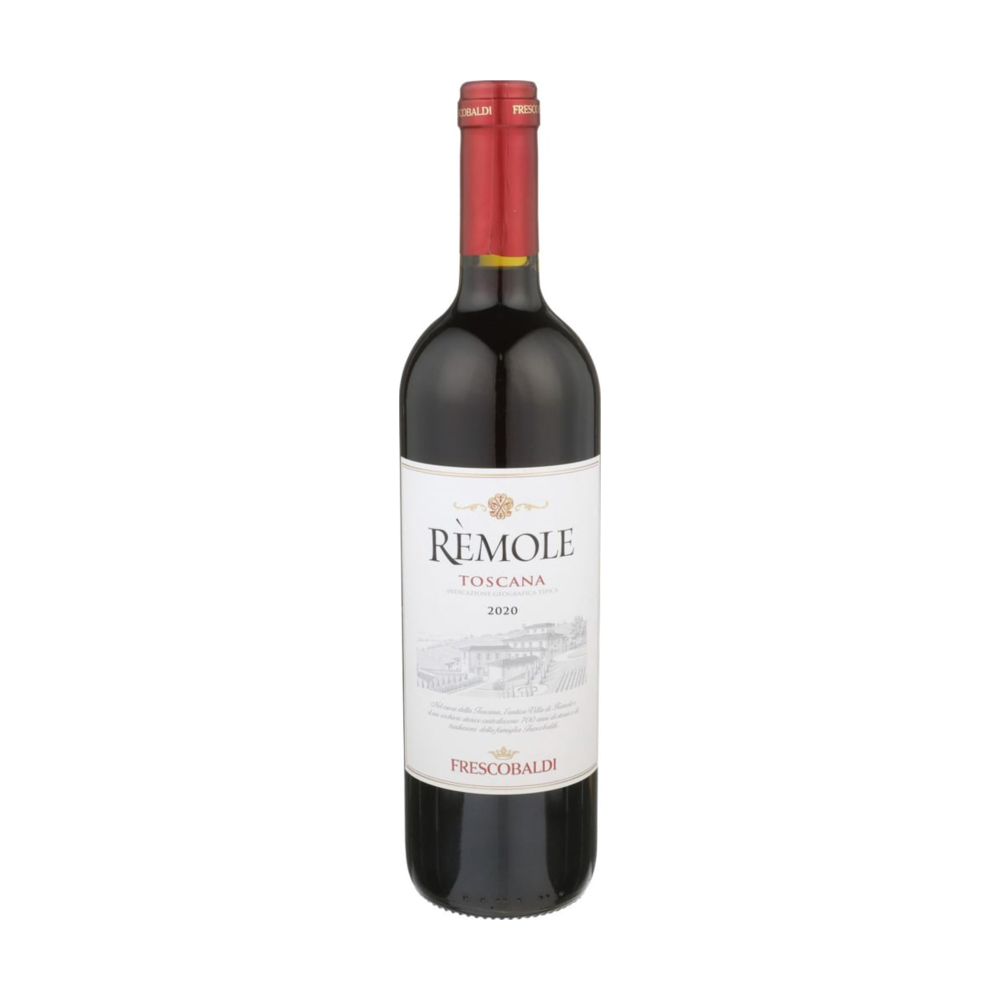
Frescobaldi Remole Tuscany Sangiovese Based Italy Red Wine
- Style
- Red wine
- Size
- 750 ml
- Grape
- Sangiovese
- Region
- Tuscany
- Shelf barcode
- 0839183000183
Our take
What we make of this bottle
Tuscany runs from the warm coast up into cooler inland hills, a big stretch of country rather than one vineyard. This red carries the Tuscany name but not a narrower one like Chianti or Brunello, which is the part our record leaves open. Its price is the standout: among the reds we track it lands near the cheapest end, at $10.99 to $19.99 across the seven stores we checked in September 2026.
The maker gives it long roots, since Frescobaldi says the family has made wine in Tuscany since the early 1300s, which is the house's history and not a claim about this bottle. The grape is Sangiovese, and a grape guide describes it as cherry-led, with herbs, bright acidity and firm tannin, and notes that climate, yield and oak can pull it lighter or more concentrated; that is Sangiovese in general, not a promise about this red. We do not have a shopper rating for this bottle.
Frescobaldi's own page for Rèmole settles the appellation question our record leaves open: this is a Toscana IGT wine, not a Chianti or another named appellation, and the producer gives the blend precisely, Sangiovese with a percentage of Cabernet Sauvignon. The technical notes for the current 2024 vintage list 12.5 percent alcohol and a short cellar path, four months in steel tanks followed by two months of refinement in the bottle, with no oak mentioned. The producer's own tasting notes describe a bright red-purple wine with small red and black fruit, a touch of spice and balsamic notes, calling it "elegant" with "beautiful persistence" and a softness "perfectly harmonized," the producer's words.
Our call: buy this for the price and the producer's plain account of an easy, cherry-forward blend; Frescobaldi names the Toscana IGT classification, the Sangiovese-and-Cabernet-Sauvignon blend and a short four months in steel outright, and among the reds we track it lands near the cheapest end. Pass if a named appellation like Chianti or Brunello matters to your glass; this stays at the broader Toscana IGT level, and no shopper rating has reached our record yet to confirm the crowd's read.
The Grocery Store Wine Desk · written Sep 16, 2026 from our research file for this wine. Numbers reflect our latest checks.
More from the desk.
Related bottles with a written overview and a public evidence file.
Dellatorri
Read our take →Ali Sopra
Ali Sopra Tuscana Red Wine
Read our take →Argiano
Argiano Non Confunditur Rosso Toscana Italian Red Wine
Read our take →Cortelunga
Cortelunga Tuscan White Italian Wine
Read our take →Cortelunga
Cortelunga Sangiovese Red Italian Wine
Read our take →Frescobaldi
Frescobaldi Tenuta CastelGiocondo Sangiovese Brunello di Montalcino Italian Red Wine
Read our take →The prices we checked
Dated store checks, not a promise about your store.
- Kroger, Atlanta suburbs, GA$12.49
- Kroger, Cincinnati, OH$19.99
- Fred Meyer, Portland, OR$12.99
- King Soopers, Colorado Springs, CO$10.99
- Kroger, Knoxville, TN$12.99
- Kroger, Richmond, VA$15.99
- QFC, Tacoma, WA$17.99
The regular price can vary by store and date.
From the producer
Family history
Frescobaldi says the family has produced wine in Tuscany since the early 1300s.
Research status
What we are still checking
Our overview above draws on the dated store feed, shopper ratings, our region and grape research, and any sourced producer facts. We are still working to confirm the current release, the full producer record, and the bottle itself, and we update this page as we learn more.
Getting to know Tuscany.
A Tuscany or Toscana origin covers coastal plains, inland hills and mountain edges. It gives more detail than Italy alone, but it cannot replace an exact designation such as Chianti, Brunello di Montalcino or Toscana IGT.
What the name means
Tuscany is an Italian administrative and wine region, not one protected designation. Its DOCG, DOC and IGP names have narrower legal meanings and must remain distinct.
How grapes grow here
Mediterranean influence is stronger near the Tyrrhenian coast, while elevation and distance inland bring cooler conditions and larger temperature changes. One Tuscan climate description does not fit every vineyard.
What lies under the vines
Clay, limestone, marine sediment, sand, alluvium and localized volcanic material occur across Tuscany. The regional name does not establish one soil profile.
How large the region is
- Origin hierarchy
- Regione Toscana maintains separate lists and controls for the region's DOCG, DOC and IGP wines.
- Mapping limit
- Use this record only when the description supports Tuscany but not a registered Tuscan designation with a more specific record.
Places within the region
- Central hills
- Chianti and Montalcino are distinct protected wine areas within Tuscany and should resolve to their own records.
- Coast and inland
- The Tuscan coast and interior differ in maritime influence, elevation and landscape, with many separate DOC, DOCG and IGP names.
Getting to know Sangiovese.
Sangiovese is a red grape closely associated with central Italy and is the main grape in Chianti wines. It is also grown elsewhere as a varietal wine or blending grape.
Category guide
What to expect in the glass
An official category guide describes cherry-led fruit, herbs, clear acidity and firm tannin. Climate, yield, blending and oak can move the result from light and direct to more concentrated.
Sources: New Zealand Winegrowers. Checked Aug 10, 2026. See all 8 Sangiovese wines we cover →
Where this information comes from
- Store listing
- Price, package, product identifier. Checked Aug 10, 2026.
- Barcode
- The shelf barcode shown here is computed from the store product identifier. It has not been checked against a bottle.
- Method
- Every price, rating and fact here is a dated observation. How we check.