Our take
Pio Cesare Nebbiolo Langhe Piedmont Red Wine
- Style
- Red wine
- Size
- 750 ml
- Grape
- Nebbiolo
- Region
- Piedmont
- Shelf barcode
- 0086891030586
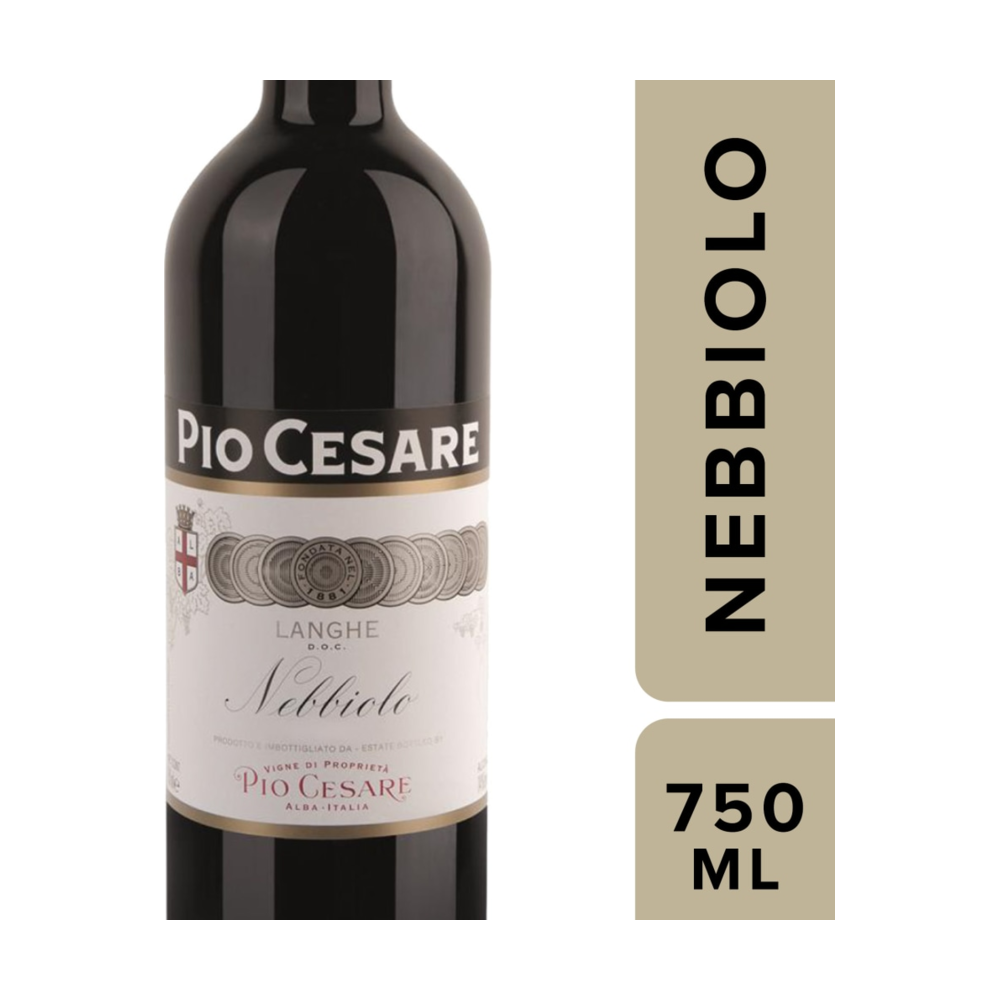
Our take
What we make of this bottle
We do not have a shopper rating for this wine, so its story starts with the grape. Our grape research ties Nebbiolo closely to Piedmont in northwestern Italy and notes that the same grape is bottled under several protected names, among them Nebbiolo d'Alba, Barolo and Barbaresco. The Langhe consortium describes the category as a dry, structured red whose color shifts from ruby toward garnet as it ages, with raspberry, spice and clear acidity, and the ability to develop over years.
Pio Cesare says it was founded in 1881 by Cesare Pio in Alba and is still run by his family, now in its fifth generation. Our region research is careful here: Piedmont is an administrative and wine region rather than one protected designation, and its narrower names, Barolo, Barbera d'Asti and Langhe among them, carry stricter legal meaning. If you are choosing between labels, that broader Piedmont name tells you less than a narrower one would. In our September 2026 checks, we saw it between $45.99 and $48.99.
Pio Cesare sources this Nebbiolo from family-owned vineyards spread across the Langhe: sites in La Morra and Serralunga within the Barolo zone, San Rocco Seno d'Elvio within the Barbaresco zone, and Diano d'Alba, grown, the producer says, in calcareous, clay and marly soils as well as more alluvial, sandy ground. The wine ferments in stainless steel with about 20 days of maceration on the skins, and the producer's own pages disagree on how long it then spends in oak: an older tech sheet gives 24 months in large oak “botti” with a small portion in French barriques, while the current site gives about 18 months in large French and Eastern European oak, again with a smaller portion in French barriques. Either way, the producer credits the Barolo- and Barbaresco-zone fruit with adding body, structure and aging potential to what is otherwise a lighter, everyday expression of Nebbiolo.
Our call: this suits a shopper who wants Pio Cesare's Nebbiolo in the lighter, everyday expression the producer itself describes; the producer sources fruit from within both of those zones plus two more communes, and the same fifth-generation family has run the estate since 1881. Pass if a fully documented cellar record matters to you; the producer's own pages give two different aging timelines for the same wine, and no shopper rating has reached us to weigh against that gap.
The Grocery Store Wine Desk · written Sep 16, 2026 from our research file for this wine. Numbers reflect our latest checks.
More from the desk.
Related bottles with a written overview and a public evidence file.
Odd Lot Wine
Read our take →Gnarly Head
1924 Double Black Red Wine Blend, California
Read our take →Beringer Vineyards
Main & Vine White Zinfandel, Pink Wine, 750ml
Read our take →Slow Press Wines
Slow Press Cabernet Sauvignon Red Wine
Read our take →Sterling Vineyards
Sterling Vintner's Collection Merlot California Red Wine
Read our take →Hob Nob
Hob Nob Pinot Noir France Red Wine
Read our take →The prices we checked
Dated store checks, not a promise about your store.
- Kroger, Atlanta suburbs, GA$48.99
- Kroger, Cincinnati, OH$45.99
The regular price can vary by store and date.
From the producer
Family estate since 1881
Pio Cesare says it was founded in 1881 by Cesare Pio in Alba, Italy, and is still run by his family, now in its fifth generation.
Research status
What we are still checking
Our overview above draws on the dated store feed, shopper ratings, our region and grape research, and any sourced producer facts. We are still working to confirm the current release, the full producer record, and the bottle itself, and we update this page as we learn more.
Getting to know Piedmont.
A Piedmont origin is more useful than Italy alone, but it still covers many separate hills, grapes and production rules. The complete designation should replace this broad record whenever the bottle supplies one.
What the name means
Piedmont is an Italian administrative and wine region, not one protected wine designation. Its DOCG and DOC names, including Barolo, Barbera d'Asti and Langhe, have narrower legal meanings.
How grapes grow here
Piedmont wine areas extend across Alpine foothills and several inland hill systems. Elevation, exposure and local landforms prevent one regional climate statement from fitting every protected origin.
What lies under the vines
Marine sedimentary hills, river deposits and mountain-derived ground occur across Piedmont's wine areas. The regional name does not establish one soil type for a bottle.
How large the region is
- Protected origins
- The regional authority lists 19 DOCG and 41 DOC wines.
- Mapping limit
- Use Piedmont only when a more specific protected name does not already have its own record.
Places within the region
- Langhe and Roero
- This hilly area contains separate protected names including Barolo, Barbaresco, Langhe and Roero.
- Monferrato and northern Piedmont
- These areas contain additional DOCG and DOC names with their own boundaries and rules.
Getting to know Nebbiolo.
Nebbiolo is a red grape closely tied to Piedmont in northwestern Italy. It makes single-grape wines under several protected names, including Nebbiolo d'Alba, Barolo and Barbaresco.
Category guide
What to expect in the glass
The Langhe consortium describes a dry, structured wine whose color moves from ruby toward garnet with age. Its category description includes raspberry, wild strawberry, spice, clear acidity and the ability to develop over time.
Sources: Consorzio di Tutela Barolo Barbaresco Alba Langhe e Dogliani. Checked Aug 10, 2026.
Where this information comes from
- Store listing
- Price, package, product identifier. Checked Aug 10, 2026.
- Barcode
- The shelf barcode shown here is computed from the store product identifier. It has not been checked against a bottle.
- Method
- Every price, rating and fact here is a dated observation. How we check.